Everything You Need To Know About The Walnut Husk Fly
Master Walnut Protection: Beating Rhagoletis juglandis
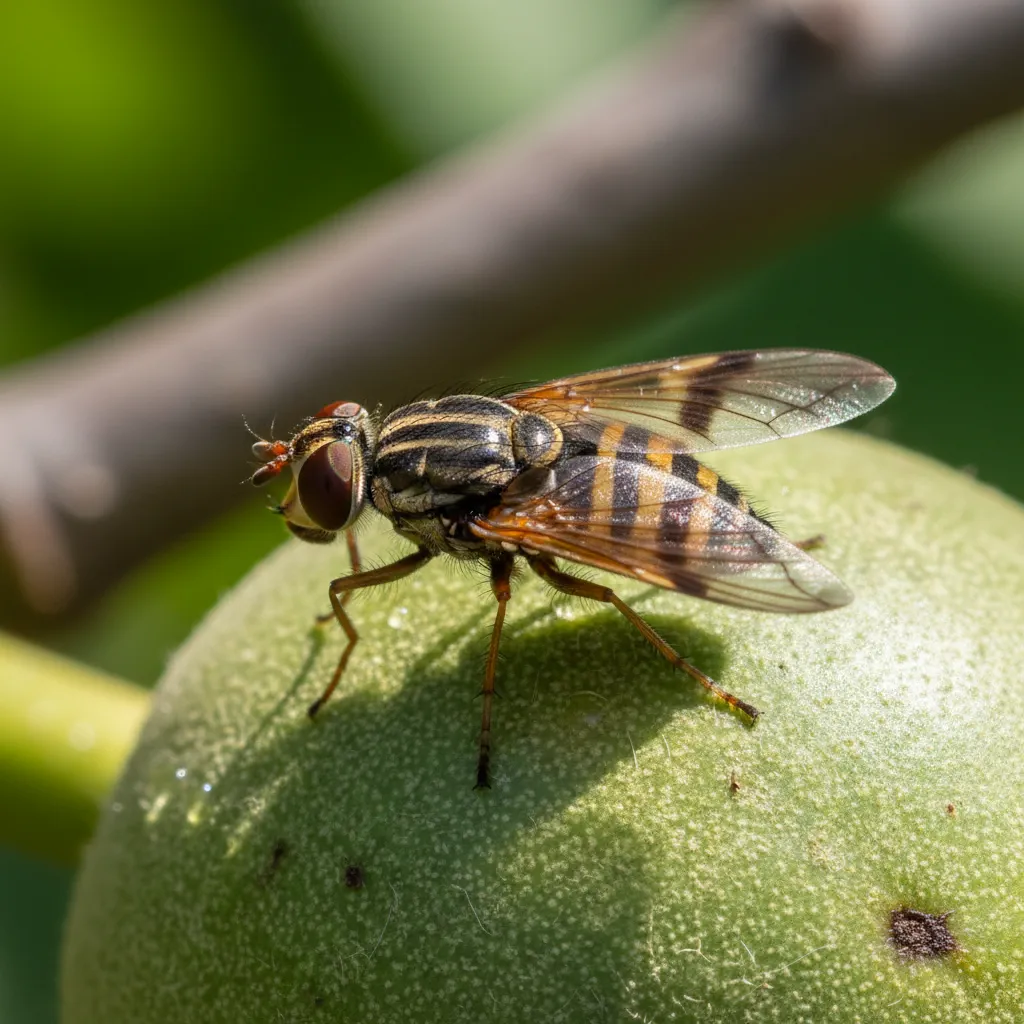
Walnut Husk Fly
Growing your own nut trees is a deeply rewarding experience. There is an undeniable joy in watching a magnificent canopy unfurl over the years, leading up to the autumn days when you can finally harvest your own fresh, creamy nuts. A healthy tree provides shade, beauty, and a crop that simply cannot be matched by shop-bought alternatives.
Yet a hidden threat can easily turn that brilliant harvest into a blackened, spoiled mess. Meet Rhagoletis juglandis, commonly known as the walnut husk fly. This highly destructive insect is specifically adapted to attack nut trees, ruining the crop from the outside in before you even realise there is a problem.
This issue is highly relevant to UK gardeners right now. As global temperatures shift and warmer summers become the norm, pests migrate to new territories. Staying ahead of invasive walnut pests is absolutely vital for protecting your beloved trees.
This comprehensive guide will show you exactly how to defend your crop. You will learn how to identify the insect at every stage of its life, understand its completely bizarre mating behaviours, recognise the early signs of damage, and implement highly effective walnut protection strategies to secure your harvest year after year.
Meet the Enemy: What is the Walnut Husk Fly?
Walnut Husk Fly
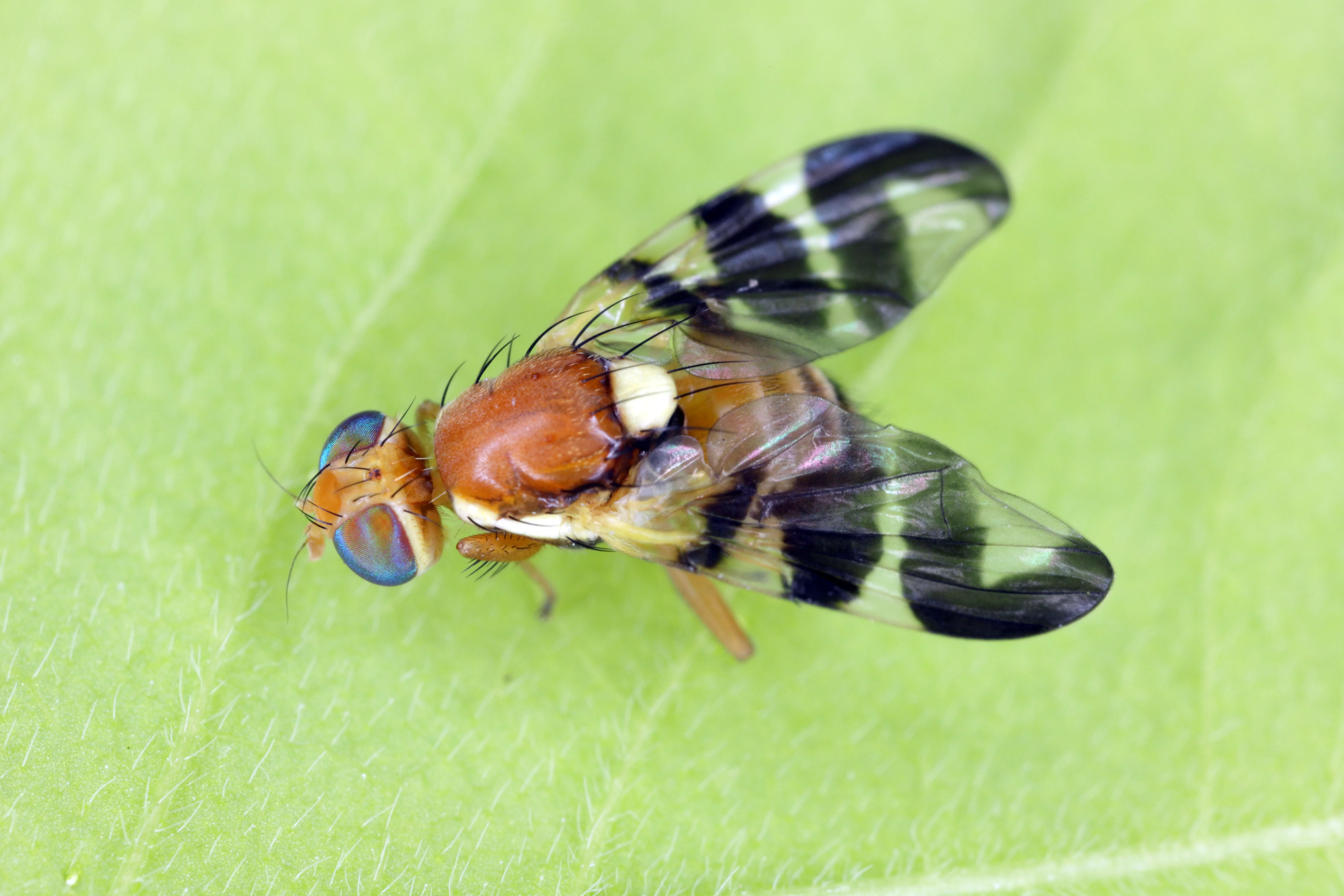
Rhagoletis juglandis is a highly specialised species of fruit fly. Unlike the common flies you might find buzzing around your kitchen, this insect has evolved with one primary goal: to locate, infest, and consume the fleshy outer layer of developing walnuts.
The story of this pest begins in the south-western United States and Mexico, where it naturally evolved alongside native tree populations. However, international trade and shifting climates have allowed it to travel far beyond its original borders.
The fly reached Europe in the late 1980s and has been spreading steadily across the continent ever since. For gardeners in the UK, this creeping migration means we can no longer assume our nut trees are safe from continental threats. Proactive walnut protection is now an essential part of the gardening calendar.
Spotting the Culprit: Identification Guide
Walnut Husk Fly
Early identification is the most important factor in effective walnut protection. If you know what to look for, you can stop a minor issue from becoming a total orchard disaster.
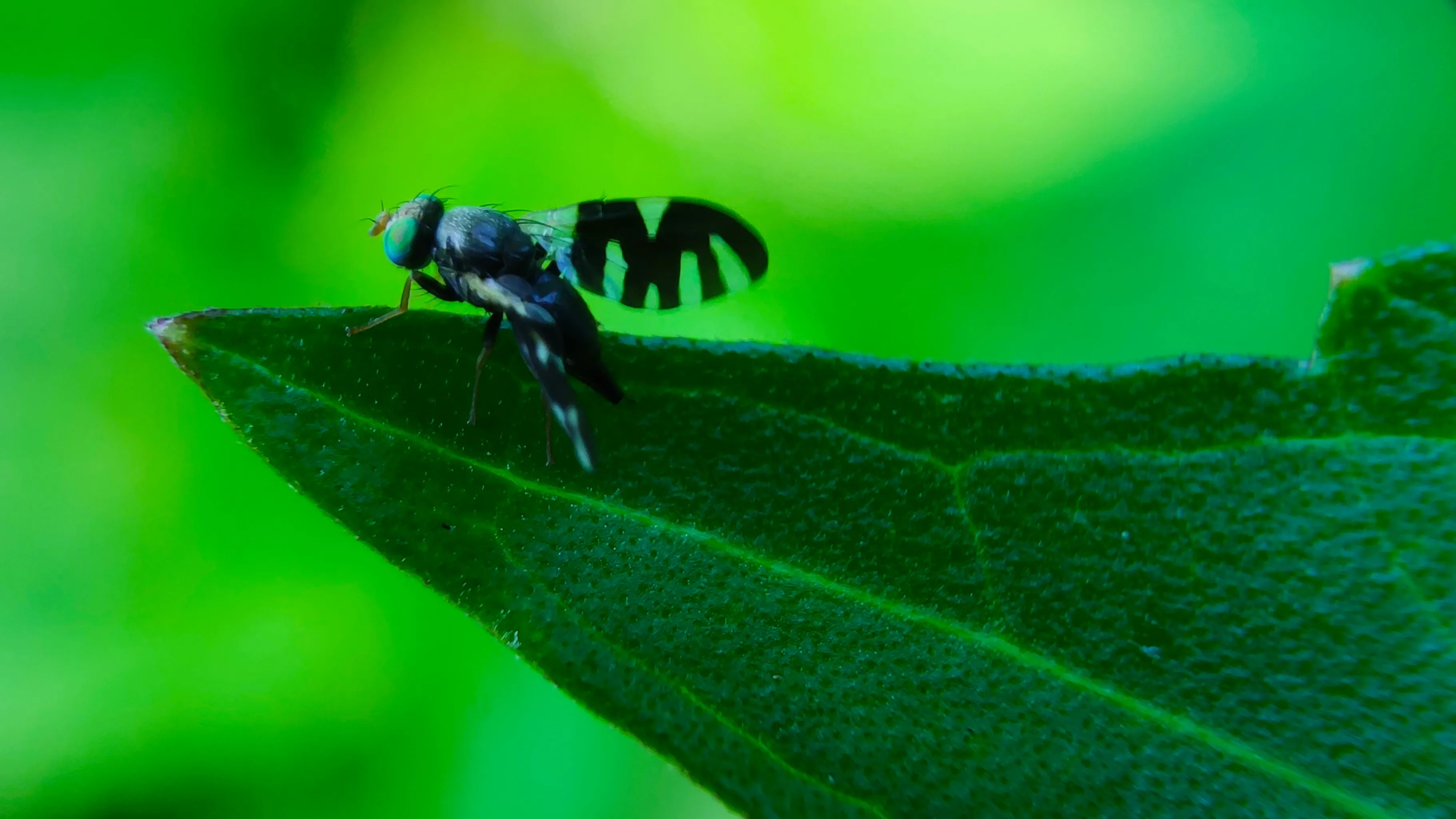
Adult flies are surprisingly small, measuring around four millimetres in length. This makes them slightly smaller than a standard housefly. They have a tawny brown body, prominent green iridescent eyes, and a very distinct yellow spot on their back (dorsum). If you look closely at their translucent wings, you will notice distinctive, dark, triangular bands stretching across the surface.
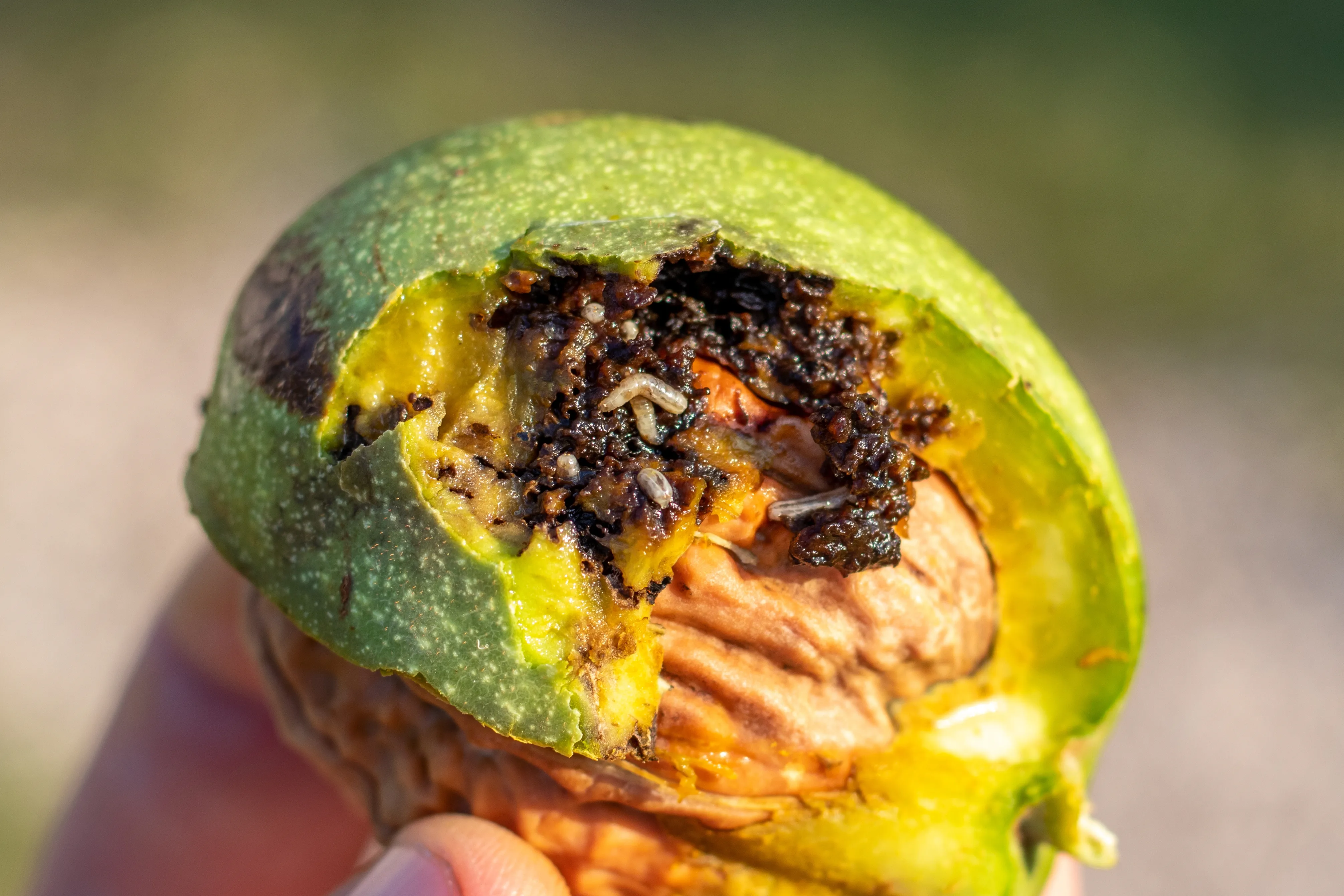
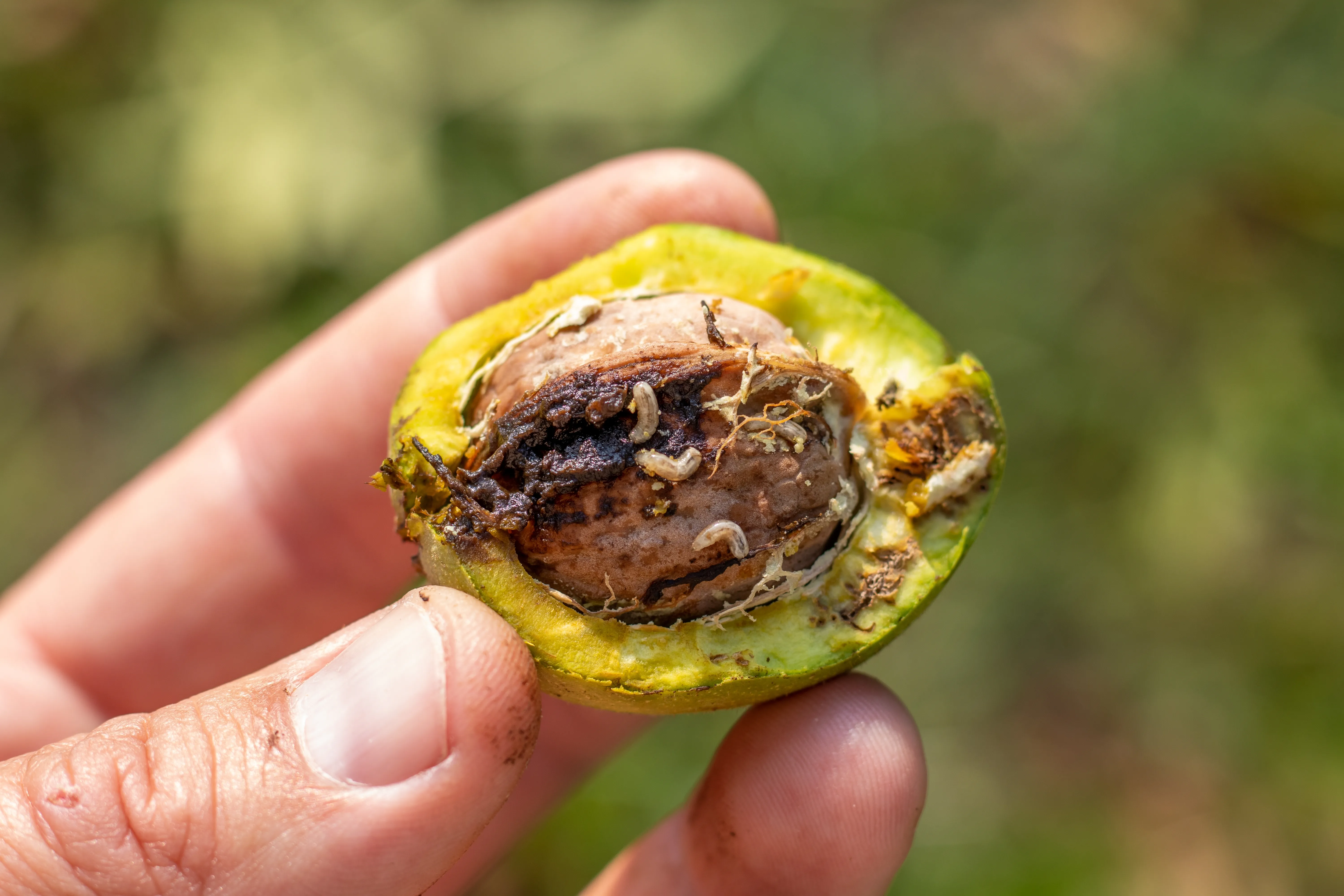
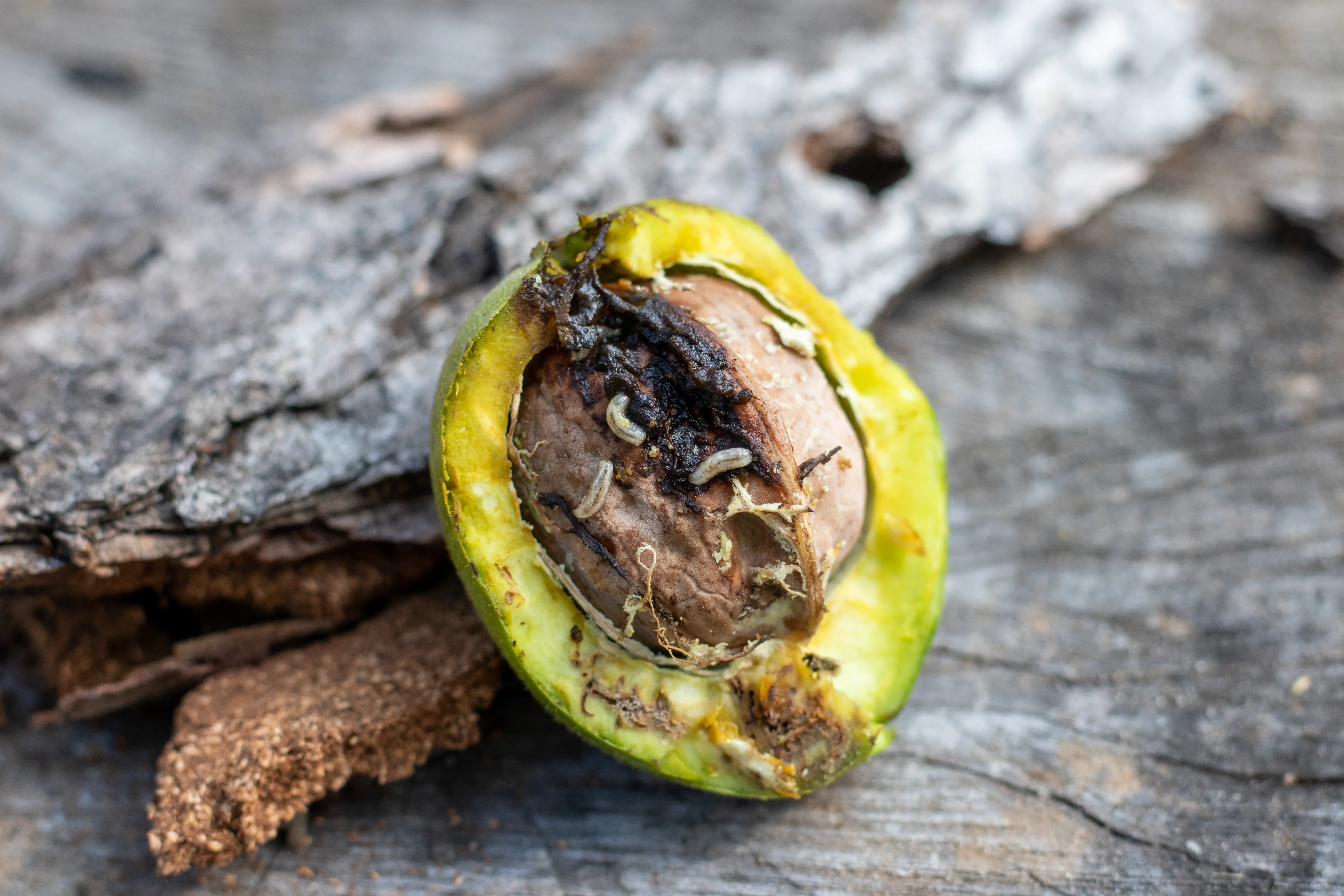
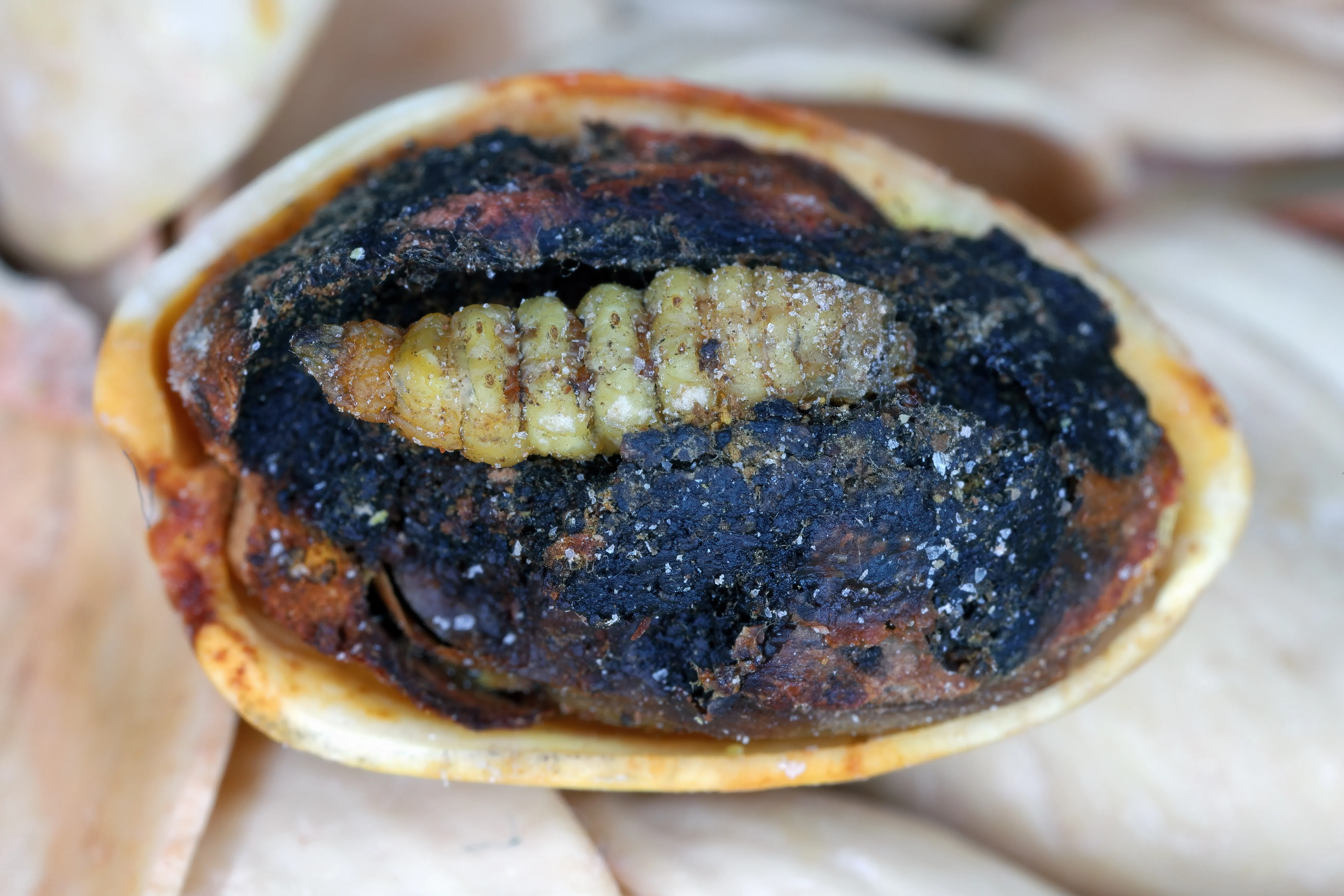
The larvae, or maggots, are the stage of the insect that causes the actual damage. When they first hatch, these larvae are almost entirely transparent and very difficult to spot. As they mature and feed on the husk, they grow to about nine millimetres long and turn a creamy white or pale yellow colour. You will easily spot their dark, prominent black mouthparts wriggling inside the damaged fruit.
If you happen to dig around the base of an infested tree, you might also uncover the pupae. These look remarkably like tiny grains of wheat, featuring a rigid, straw-coloured barrel shape that helps them blend perfectly into the soil.
Which Trees Are on the Menu?
Walnut Husk Fly
These aggressive walnut pests have very specific tastes, but they are highly effective at finding their preferred hosts.
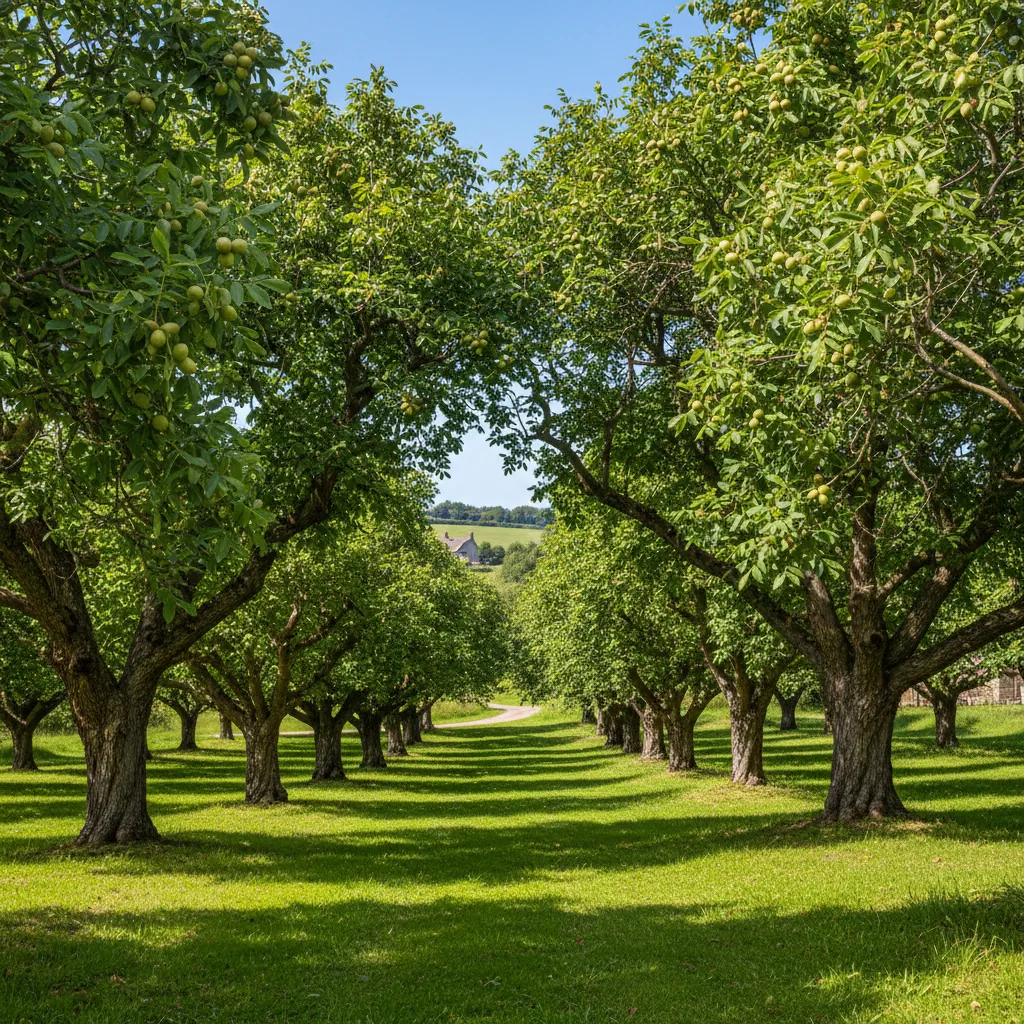
The English or Persian walnut (Juglans regia) is highly susceptible to attack. This is the classic variety most commonly grown in UK gardens and commercial orchards. California black walnuts (Juglans hindsii) and the Arizona walnut (Juglans major) are also prime targets.
Interestingly, susceptibility can vary between specific cultivars based on the softness and thickness of the green husk. Popular UK garden varieties like 'Broadview' and 'Buccaneer' can fall victim if the fly population is high enough. Cultivars with softer skins provide less resistance to the female fly's egg-laying ovipositor.
The danger does not stop at nut trees. If you have a particularly heavy infestation, the flies will occasionally experience a population "spillover". In these cases, they will happily attack late-ripening peaches and apricots planted too close to the infested nut trees.
The Lifecycle of Rhagoletis juglandis
Walnut Husk Fly
Understanding the lifecycle of this pest gives you the power to interrupt it. The fly follows a univoltine lifecycle, meaning it completes just one single generation per year.
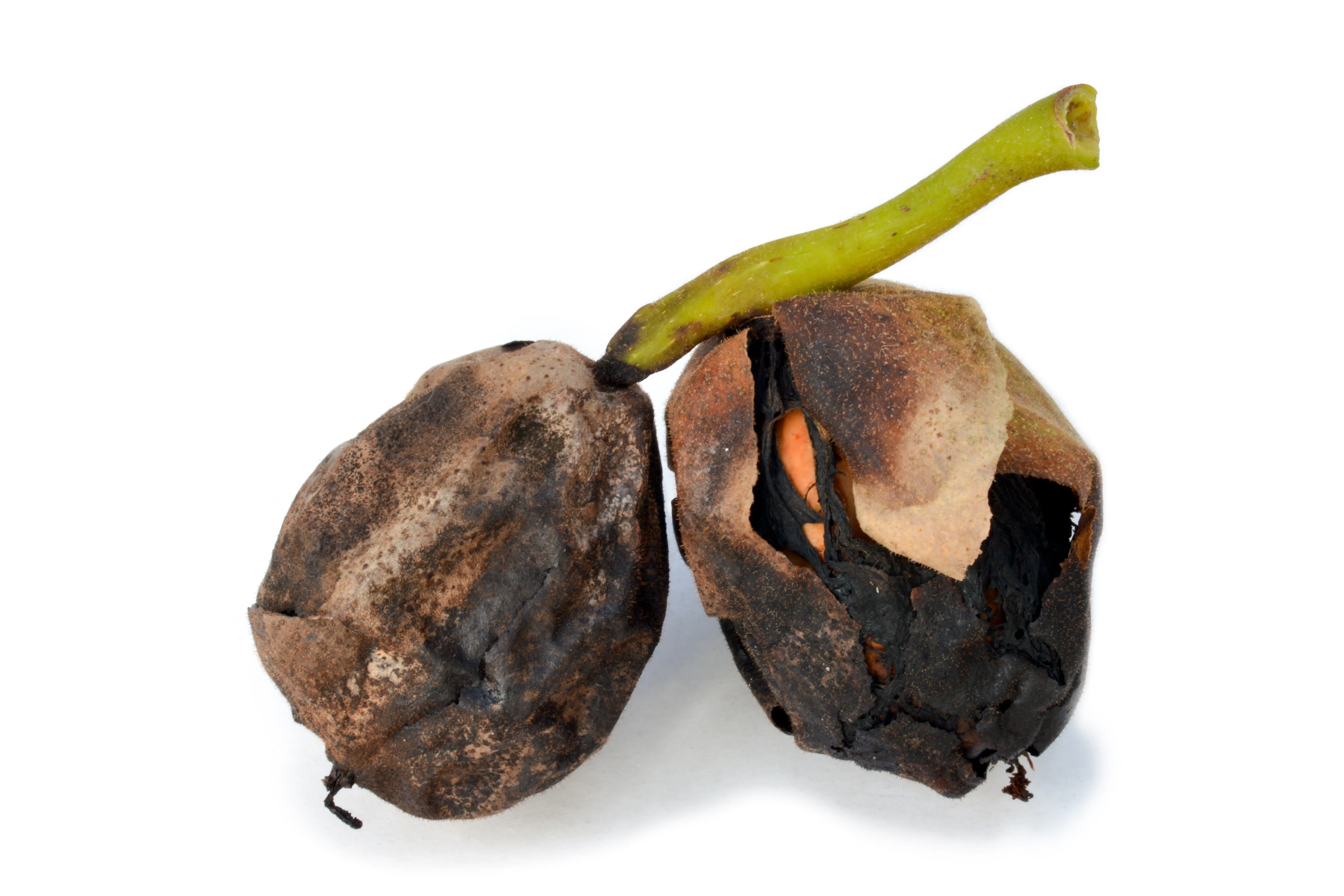
The cycle begins deep underground. The insect overwinters as a rigid pupa, buried securely in the soil beneath the canopy of the host tree. It waits patiently through the cold winter and wet spring.
As the soil warms in mid to late summer, the adults finally emerge. They spend a few days feeding on morning dew and plant sap to build up their energy before seeking out a mate. Once mated, the female searches for a suitable, ripening nut. She punctures the green husk and deposits a clutch of around 15 eggs just beneath the surface.
The larvae hatch within a week and immediately begin feasting on the soft green tissue. After gorging themselves for several weeks, the plump maggots drop to the ground and burrow into the soil to pupate, starting the cycle all over again.
Astonishingly, this insect has a built-in survival mechanism for harsh years. While most adults emerge the following summer, a small percentage of pupae remain completely dormant in the soil for up to two years. This incredible tactic ensures the population survives even if a late frost destroys an entire year's nut crop.
Bizarre Behaviours: Courtship and Superparasitism
Walnut Husk Fly
The world of Rhagoletis juglandis is full of fascinating and entirely bizarre behaviours that set it apart from other garden pests.
Airborne Infrasound
Courtship among these flies is an elaborate affair. To attract a mate, the males perform a highly specific wing display. They raise their wings, turn the edges upward, and vibrate them at an incredibly low frequency. This rapid movement creates airborne infrasound. These strange acoustic bouts can last anywhere from a brief five seconds to a marathon fifteen minutes, all designed to secure the attention of a female.
Once a female is ready to lay her eggs, she relies entirely on resource-based cues. She looks for the specific green colour that indicates a perfectly ripening husk, ensuring her offspring have the softest, most nutritious food source available.
The Phenomenon of Superparasitism
Perhaps the most unusual behaviour is a phenomenon known as superparasitism. In the insect world, a female will usually leave a chemical marker after laying eggs to warn other females that the fruit is already taken.
While female walnut husk flies do drag their ovipositors to leave a marking pheromone, other females completely ignore it. They will actively seek out existing egg punctures and lay their own clutches inside the exact same hole, repeatedly infesting the same fruit even when healthy, untouched nuts are hanging right next to it.
Why do they do this? It comes down to energy and time-saving. Puncturing the tough outer skin of a green husk takes a tremendous amount of effort. By reusing an existing cavity, the female saves precious time, allowing her to lay more eggs throughout her short lifespan.
The Devastating Damage Caused
Walnut Husk Fly
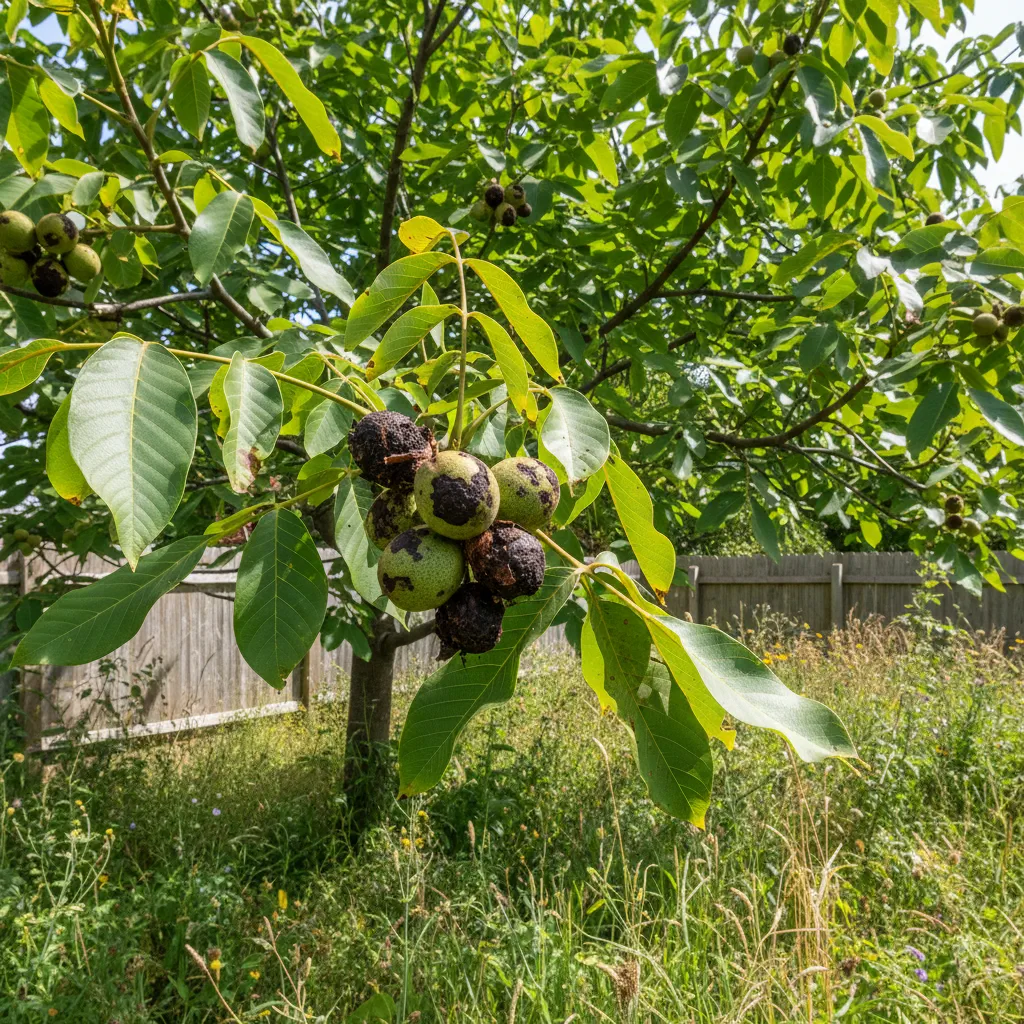
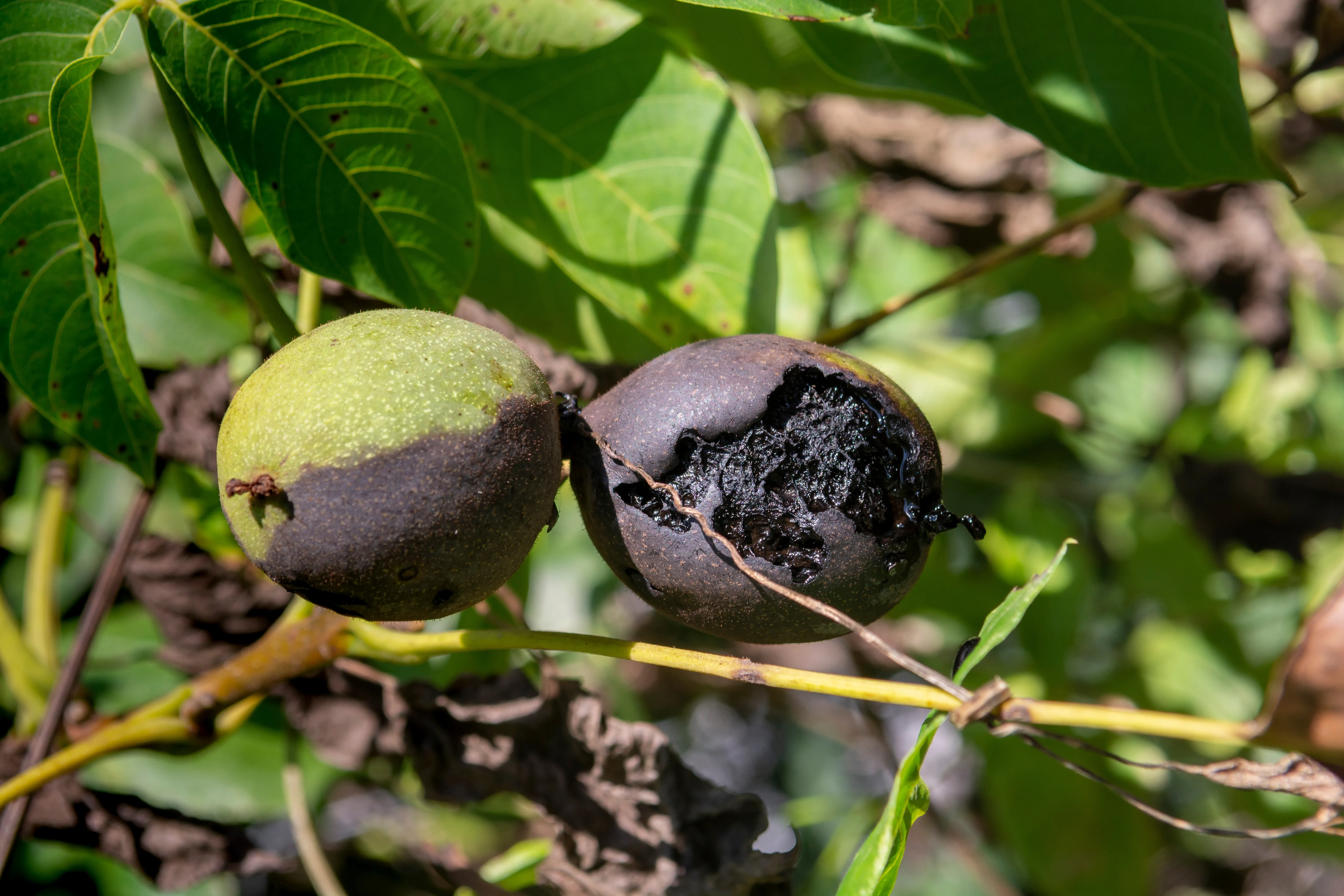
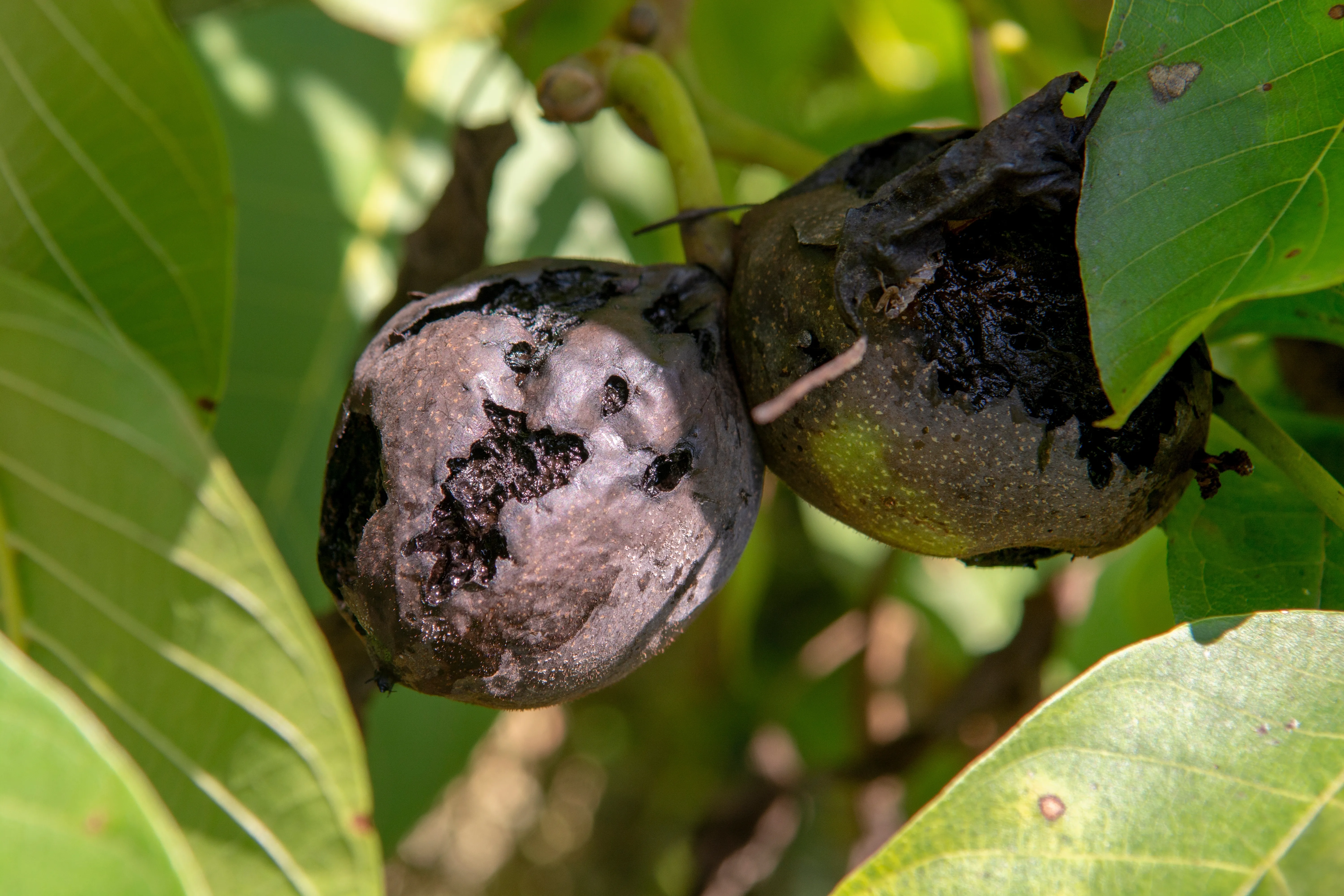
The feeding frenzy of the maggots leads to complete destruction of the outer husk. What starts as a small, dark sting mark quickly spreads. As the larvae tunnel through the green tissue, the husk turns soft, black, and exceptionally slimy. It eventually rots into a foul-smelling sludge that sticks tightly to the inner shell.
This causes immediate cosmetic damage. The rotting husk releases dark tannins that cause severe shell staining, permanently ruining the clean, blonde appearance of the nut.
The real heartbreak happens during early-season infestations. If the flies attack before the inner kernel has fully developed, the feeding interrupts the flow of nutrients. This results in shrivelled, darkened kernels that are entirely inedible. Furthermore, the compromised outer layer invites secondary fungal infections, leading to increased mould that can destroy whatever is left of the crop.
Step-by-Step Monitoring
Walnut Husk Fly
You cannot fight an enemy you cannot see. Proactive monitoring is the absolute cornerstone of brilliant walnut protection. You want to detect the arrival of the adult flies before they have a chance to mate and lay their eggs.
To do this, use yellow sticky traps supercharged with an ammonium carbonate lure. The bright yellow colour mimics the specific hue of foliage that attracts the flies, while the ammonia scent closely resembles the smell of a protein food source.
How to set your traps:
- Purchase high-quality yellow sticky traps and ammonium carbonate lures from a specialist organic gardening supplier.
- Hang the traps high in the dense foliage of your tree. You want them at least two metres off the ground, ideally on the shady north side where the flies prefer to rest.
- Put your traps out in early summer, well before the husks begin to soften.
- Check the sticky surfaces two to three times a week. Look for the distinctive 4mm flies with the yellow spots and banded wings.
Winning the Battle: Management and Control
Walnut Husk Fly
Once you have identified the presence of Rhagoletis juglandis, you must act quickly. A combination of strict hygiene, physical barriers, and targeted organic treatments is the best path to success.
Strict Orchard Hygiene
The most effective, chemical-free way to break the lifecycle is ruthless orchard hygiene. You must prevent the mature maggots from reaching the soil. Sweep up and destroy all fallen, infested fruits immediately. Check the ground every single day during the late summer drop. Do not place infested nuts in your standard compost bin, as the pupae will happily survive the winter there. Instead, burn them, bag them securely for the household bin, or submerge them in water for a week to drown the larvae.
Installing Landscape Fabric
Create a physical barrier between the tree and the earth. Laying a dense, heavy-duty landscape fabric under the entire canopy of the tree serves a dual purpose. In the summer, it prevents dropping larvae from burrowing into the ground to pupate. The following spring, it blocks any overwintering adults from emerging out of the soil and flying up into the branches. Pin the fabric down tightly and sweep it clean regularly.
Organic Bait Sprays
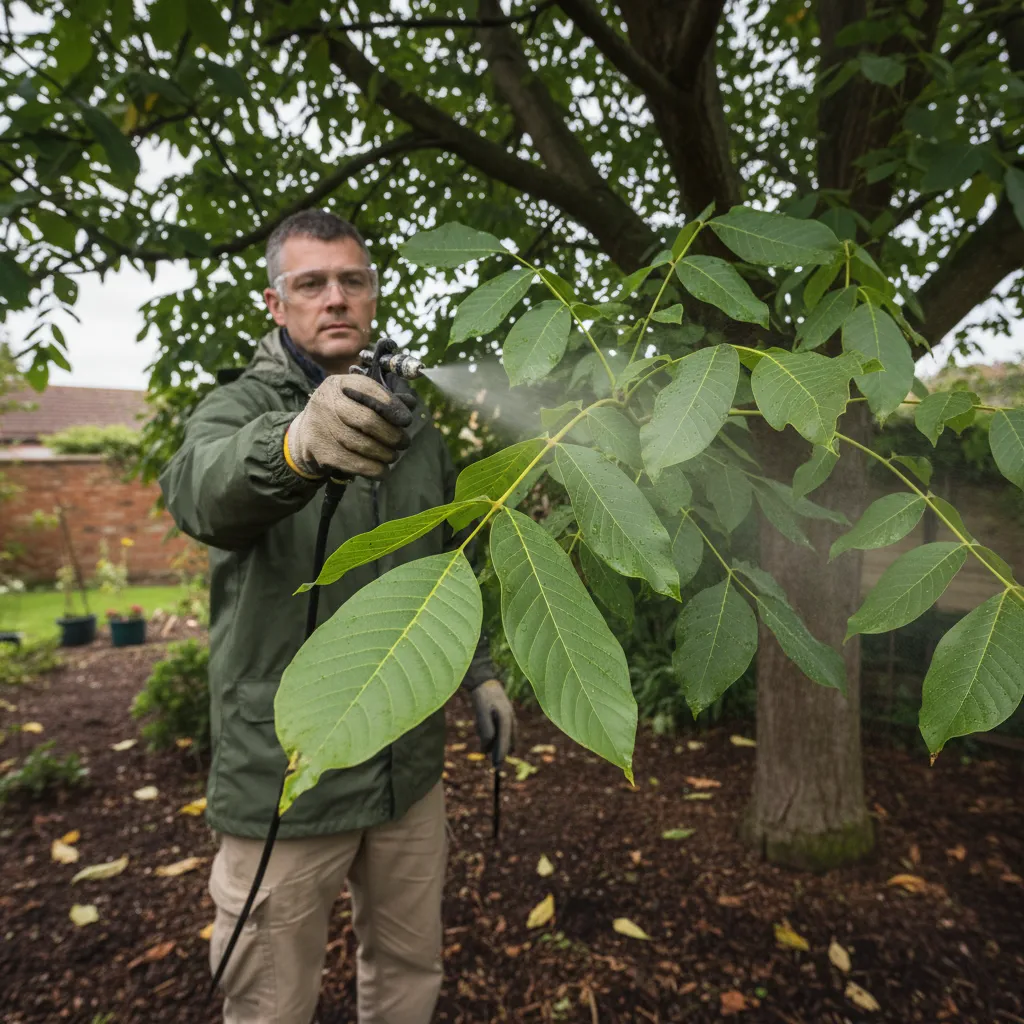
For severe infestations, organic bait sprays are highly effective. Look for products containing spinosad, a natural substance made by a soil bacterium that is toxic to insects but safe for the environment. Products like GF-120 are designed specifically as fruit fly baits. The flies are attracted to the sweet bait, ingest the spinosad, and die before they can lay eggs. Apply these sprays as large droplets on the foliage as soon as your yellow sticky traps indicate the adults have arrived.
Frequently Asked Questions About Walnut Pests
Walnut Husk Fly
Will a hard winter kill the overwintering pupae?
Unfortunately, the pupae are highly resilient. They bury themselves several inches deep in the soil, which insulates them against freezing temperatures. Relying on a cold snap is not a viable strategy for protecting your trees.
Can I still eat the nuts if the husk is black and slimy?
If the infestation happened late in the season after the shell hardened and the kernel formed, the nut inside might still be perfectly fine. You will need to wear heavy gloves to scrub off the foul, slimy husk. The shell will be heavily stained, but cracking it open may reveal a healthy kernel. If the kernel is black, shrivelled, or covered in mould, throw it away immediately.
Do normal garden bug sprays work against the husk fly?
Standard contact insecticides are rarely effective. Because the larvae live entirely inside the fleshy husk, they are completely protected from chemical sprays. This is why targeted bait sprays that attract the adults before they lay eggs are the only reliable chemical control method.
Secure Your Walnut Harvest Today
Walnut Husk Fly
Protecting your nut trees from devastating walnut pests requires a little bit of knowledge and a lot of proactive care. By identifying Rhagoletis juglandis early, understanding its bizarre lifecycle, and taking immediate action to interrupt its reproduction, you can save your crop from ruin.
Do not wait until you see blackened husks falling to the grass. Inspect your trees this week. Head out to the garden, clear the ground beneath your canopy, and get your monitoring systems in place. If you need supplies, check with your local specialist organic gardening suppliers to pick up yellow sticky traps, ammonium carbonate lures, and heavy-duty landscape fabric. With the right tools and timing, you can defeat the husk fly and enjoy a brilliant, bountiful harvest for years to come.
How to Prune Climbing Vines
List by Variety
- How to Prune Actinidia
- How to Prune Akebia
- How to Prune Bougainvillea
- How to Prune Campsis
- How to Prune Celastrus
- How to Prune Chilean Glory Vine
- How to Prune Clematis Armandii
- How to Prune Clematis Montana
- How to Prune Climbing Rose
- How to Prune Hedera GoldHeart
- How to Prune Honeysuckle
- How to Prune Hydrangea Petiolaris
- How to Prune Ivy
- How to Prune Japanese Wisteria
- How to Prune Morning Glory
- How to Prune Parthenocissus
- How to Prune Persian Ivy Hedera Colchica
- How to Prune Schisandra
- How to Prune Star Jasmine
- How to Prune Sweet Peas
- How to Prune True Jasmine
- How to Prune Virginia Creeper
- How to Prune Wisteria
How to Prune Hedges
List by Variety
- How to Prune an Arborvitae Hedge
- How to Prune a Barberry Hedge
- How to Prune a Beech Hedge
- How to Prune a Boxwood Hedge
- How to Prune a Butterfly Bush Hedge
- How to Prune a Cotoneaster Hedge
- How to Prune an English Lavender Hedge
- How to Prune an Escallonia Hedge
- How to Prune an Euonymus-Hedge
- How to Prune a Firethorn Hedge
- How to Prune a Forsythia Hedge
- How to Prune a Griselinia Hedge
- How to Prune a Hawthorn Hedge
- How to Prune a Holly Hedge
- How to Prune a Hornbeam Hedge
- How to Prune a Juniper Hedge
- How to Prune a Laurel Hedge
- How to Prune a Leylandii Hedge
- How to Prune a Lilac Hedge
- How to Prune a Maple Leaf Viburnum Hedge
- How to Prune a Photinia Hedge
- How to Prune a Pink Ramanus Rose Hedge
- How to Prune a Privet Hedge
- How to Prune a Pyracantha Hedge
- How to Prune a Spirea Hedge
- How to Prune a Thuja Hedge
- How to Prune a Viburnum Hedge
- How to Prune a Western Red Cedar Hedge
- How to Prune a Yew Hedge
How to Prune Shrubs
List by Variety
- How to Prune an Abelia Shrub
- How to Prune an Abutilon
- How to Prune an Acer / Japanese-Maple
- How to Prune an Amelanchiers
- How to Prune an Apple-Tree
- How to Prune an Arbovitae Shrub
- How to Prune an Arbutus
- How to Prune an Aucuba
- How to Prune a Azalea Mollis
- How to Prune Azaleas
- How to Prune a Bay Tree Shrub
- How to Prune a Berberis Darwinii
- How to Prune Berberis Deciduous Types
- How to Prune a Boxwood Shrubs
- How to Prune a Brachyglottis Senecio
- How to Prune a Buddleia Alternifolia
- How to Prune Buddleias Butterfly Bushes
- How to Prune a Buddleja Globosa
- How to Prune a Callicarpa
- How to Prune a Camellia
- How to Prune a Caryopteris
- How to Prune a Catalpa Bignonioides Aurea
- How to Prune Ceanothus Deciduous Types
- How to Prune Ceanothus Evergreen Types
- How to Prune a Ceratostigma
- How to Prune a Chaenomeles
- How to Prune a Choisya
- How to Prune a Cistus
- How to Prune a Clematis
- How to Prune a Cornus
- How to Prune a Cotinus Royal Purple
- How to Prune a Cytisus Scoparius
- How to Prune a Exochorda x Macrantha
- How to Prune a Forsythia
- How to Prune a Hebe
- How to Prune a Hydrangeas
- How to Prune Juniper Shrubs
- How to Prune a Lavatera
- How to Prune Lilac Bushes
- How to Prune a Mugo Pine
- How to Prune Rose Bushes
- How to Prune Ribes
- How to Prune Spirea Shrubs
- How to Prune Viburnum Shrubs
- How to Prune a Weigela
- How to Prune a Yew
How to Prune Trees
List by Variety
- How to Prune a Apple Tree
- How to Prune a Apricot Tree
- How to Prune a Ash Tree
- How to Prune a Birch Tree
- How to Prune a Cherry Tree
- How to Prune a Elm Tree
- How to Prune a Fig Tree
- How to Prune a Grape Tree
- How to Prune a Hickory Tree
- How to Prune a Maple Tree
- How to Prune a Oak Tree
- How to Prune an Olive Tree
- How to Prune a Peach Tree
- How to Prune a Pear Tree
- How to Prune a Plum Tree
- How to Prune a Poplar Tree
- How to Prune a Walnut Tree
How to Prune Climbing Vines
List by Variety
- How to Prune Actinidia
- How to Prune Akebia
- How to Prune Bougainvillea
- How to Prune Campsis
- How to Prune Celastrus
- How to Prune Chilean Glory Vine
- How to Prune Clematis Armandii
- How to Prune Clematis Montana
- How to Prune Climbing Rose
- How to Prune Hedera GoldHeart
- How to Prune Honeysuckle
- How to Prune Hydrangea Petiolaris
- How to Prune Ivy
- How to Prune Japanese Wisteria
- How to Prune Morning Glory
- How to Prune Parthenocissus
- How to Prune Persian Ivy Hedera Colchica
- How to Prune Schisandra
- How to Prune Star Jasmine
- How to Prune Sweet Peas
- How to Prune True Jasmine
- How to Prune Virginia Creeper
- How to Prune Wisteria
How to Prune Hedges
List by Variety
- How to Prune an Arborvitae Hedge
- How to Prune a Barberry Hedge
- How to Prune a Beech Hedge
- How to Prune a Boxwood Hedge
- How to Prune a Butterfly Bush Hedge
- How to Prune a Cotoneaster Hedge
- How to Prune an English Lavender Hedge
- How to Prune an Escallonia Hedge
- How to Prune an Euonymus-Hedge
- How to Prune a Firethorn Hedge
- How to Prune a Forsythia Hedge
- How to Prune a Griselinia Hedge
- How to Prune a Hawthorn Hedge
- How to Prune a Holly Hedge
- How to Prune a Hornbeam Hedge
- How to Prune a Juniper Hedge
- How to Prune a Laurel Hedge
- How to Prune a Leylandii Hedge
- How to Prune a Lilac Hedge
- How to Prune a Maple Leaf Viburnum Hedge
- How to Prune a Photinia Hedge
- How to Prune a Pink Ramanus Rose Hedge
- How to Prune a Privet Hedge
- How to Prune a Pyracantha Hedge
- How to Prune a Spirea Hedge
- How to Prune a Thuja Hedge
- How to Prune a Viburnum Hedge
- How to Prune a Western Red Cedar Hedge
- How to Prune a Yew Hedge
How to Prune Shrubs
List by Variety
- How to Prune an Abelia Shrub
- How to Prune an Abutilon
- How to Prune an Acer / Japanese-Maple
- How to Prune an Amelanchiers
- How to Prune an Apple-Tree
- How to Prune an Arbovitae Shrub
- How to Prune an Arbutus
- How to Prune an Aucuba
- How to Prune a Azalea Mollis
- How to Prune Azaleas
- How to Prune a Bay Tree Shrub
- How to Prune a Berberis Darwinii
- How to Prune Berberis Deciduous Types
- How to Prune a Boxwood Shrubs
- How to Prune a Brachyglottis Senecio
- How to Prune a Buddleia Alternifolia
- How to Prune Buddleias Butterfly Bushes
- How to Prune a Buddleja Globosa
- How to Prune a Callicarpa
- How to Prune a Camellia
- How to Prune a Caryopteris
- How to Prune a Catalpa Bignonioides Aurea
- How to Prune Ceanothus Deciduous Types
- How to Prune Ceanothus Evergreen Types
- How to Prune a Ceratostigma
- How to Prune a Chaenomeles
- How to Prune a Choisya
- How to Prune a Cistus
- How to Prune a Clematis
- How to Prune a Cornus
- How to Prune a Cotinus Royal Purple
- How to Prune a Cytisus Scoparius
- How to Prune a Exochorda x Macrantha
- How to Prune a Forsythia
- How to Prune a Hebe
- How to Prune a Hydrangeas
- How to Prune Juniper Shrubs
- How to Prune a Lavatera
- How to Prune Lilac Bushes
- How to Prune a Mugo Pine
- How to Prune Rose Bushes
- How to Prune Ribes
- How to Prune Spirea Shrubs
- How to Prune Viburnum Shrubs
- How to Prune a Weigela
- How to Prune a Yew
How to Prune Trees
List by Variety
- How to Prune a Apple Tree
- How to Prune a Apricot Tree
- How to Prune a Ash Tree
- How to Prune a Birch Tree
- How to Prune a Cherry Tree
- How to Prune a Elm Tree
- How to Prune a Fig Tree
- How to Prune a Grape Tree
- How to Prune a Hickory Tree
- How to Prune a Maple Tree
- How to Prune a Oak Tree
- How to Prune an Olive Tree
- How to Prune a Peach Tree
- How to Prune a Pear Tree
- How to Prune a Plum Tree
- How to Prune a Poplar Tree
- How to Prune a Walnut Tree
Gallery
Michael Carter
Vestibulum ante ipsum primis in faucibus orci luctus et ultrices posuere cubilia curae; Donec vel erat in nulla efficitur tempor non ut nisl. Integer venenatis eros ut dui viverra fermentum.
Sophie Wilson
Nam ut turpis hendrerit, varius nunc vel, elementum dui. Morbi vulputate dolor sit amet scelerisque egestas. Vestibulum eleifend nunc ut bibendum fermentum.
Alex Morgan
Cras non velit nec purus tempor rhoncus. Sed non mauris vitae erat consequat auctor eu in elit. Class aptent taciti sociosqu ad litora torquent per conubia nostra.