Everything You Need to Know About Actinidia
Learn how to prune Actinidia vines effectively with our comprehensive guide. Discover expert tips for maintaining healthy, thriving climbing vines in your garden.
Actinidia Pruning Guide: Everything You Need to Know
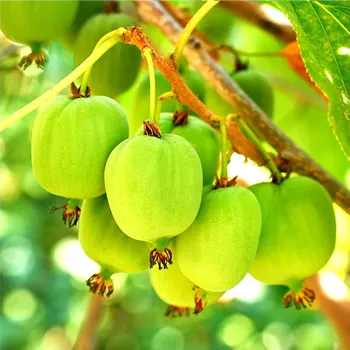
Actinidia is a genus of woody vines native to the China and other parts of the world. It is a popular choice for gardeners and landscapers alike, as it is easy to grow and maintain. Pruning is an important part of caring for Actinidia, as it helps to keep the plant healthy and encourages new growth. Pruning should be done in late winter or early spring, when the plant is dormant. This is the best time to prune, as it allows the plant to focus its energy on new growth. When pruning, it is important to remove any dead or diseased branches, as well as any branches that are growing in an undesirable direction. Pruning can also help to keep the plant in a desired shape, and can help to keep it from becoming overgrown.
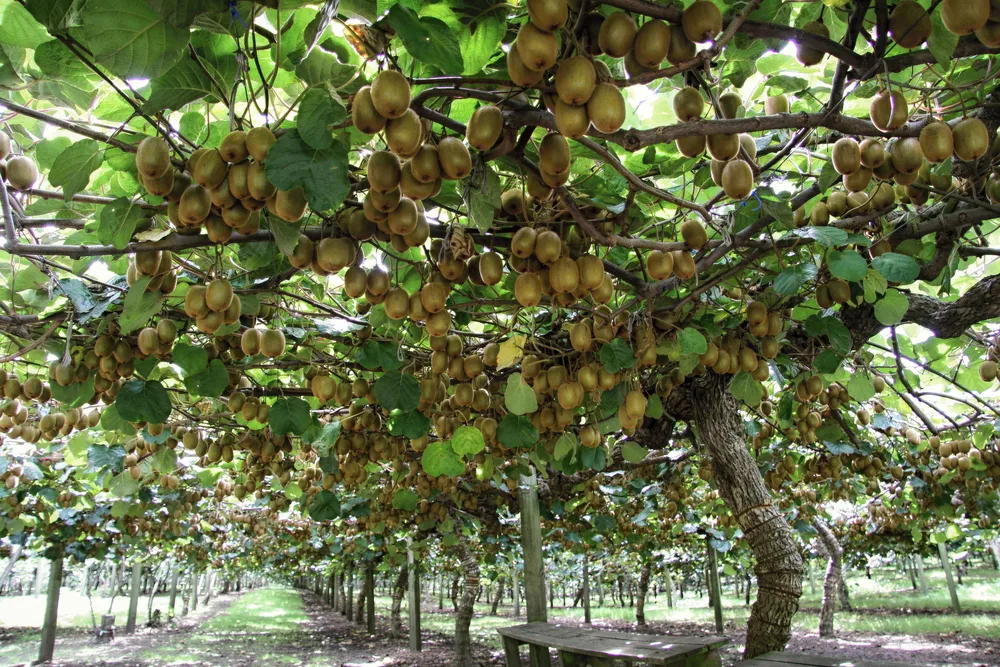
Actinidia, commonly known as kiwifruit or Chinese gooseberry, is a genus of woody vines that produce an edible berry. Despite its now-global popularity, the fruit has a rather unique and relatively recent history in the United Kingdom.
The Actinidia is native to China and was cultivated there for centuries before being introduced to the Western world. The commercial cultivation of kiwifruit didn't occur until the 20th century in New Zealand. From New Zealand, it spread to other parts of the world, including Europe and the UK.
In the UK, the first record of Actinidia faveolata, a species within the Actinidiaceae family, was discovered embedded in organic mud and is believed to be from the Pleistocene epoch. This indicates that Actinidia species might have been present in the British Isles much earlier than previously thought.
However, the Actinidia deliciosa, or the common kiwi fruit we know today, has a comparatively short history in Europe. It was only brought to New Zealand in 1904 and then improved and grown on plantations.
The rebranding of the fruit from "Chinese gooseberry" to "kiwifruit" was a marketing strategy by New Zealand growers, which eventually led to its worldwide recognition and consumption.
Today, despite the UK's cooler climate, several varieties of Actinidia can be grown successfully in the country, especially in sheltered and sunny locations. They are often used as ornamental plants for their attractive foliage and climbing habit, in addition to their fruit production.
- Actinidia deliciosa: This is the most common variety of kiwi, also known as the fuzzy kiwi. It can tolerate temperatures down to about -15 degrees Celsius.
- Actinidia arguta: Also known as kiwiberry, this variety produces smaller fruit and can be grown successfully in a warm, sunny spot.
- Actinidia chinensis: This variety, also known as golden kiwi, can be grown successfully in the UK. The fruit has a smooth skin and a sweeter taste than Actinidia deliciosa.
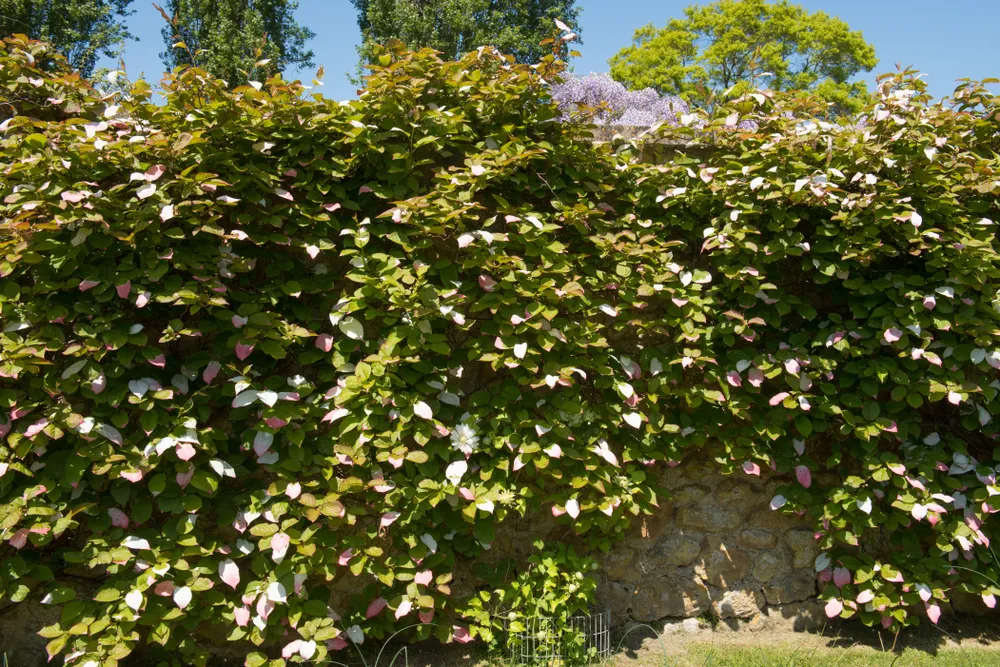
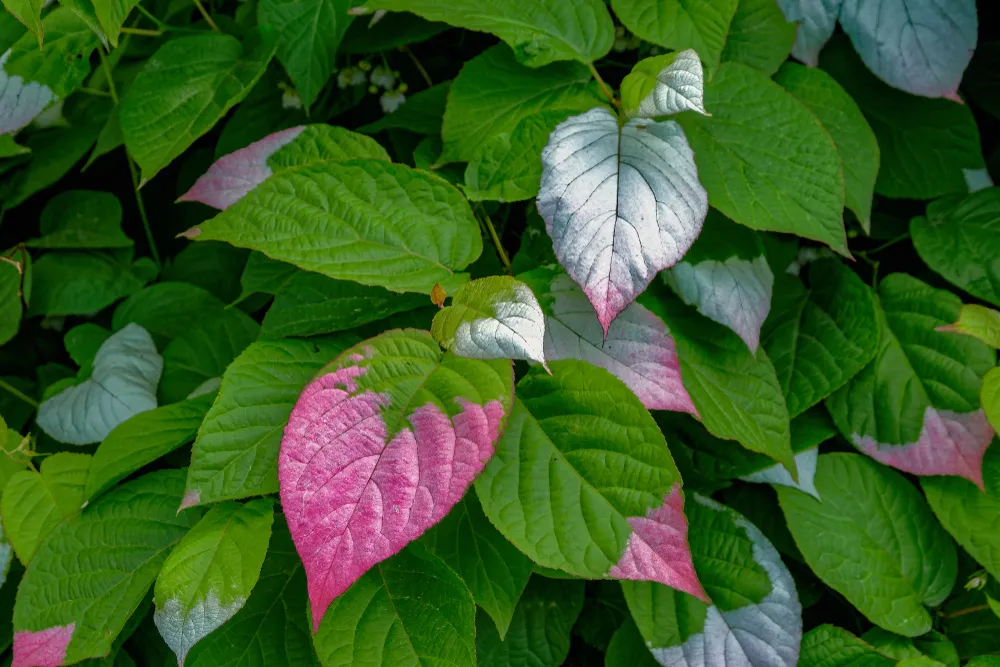
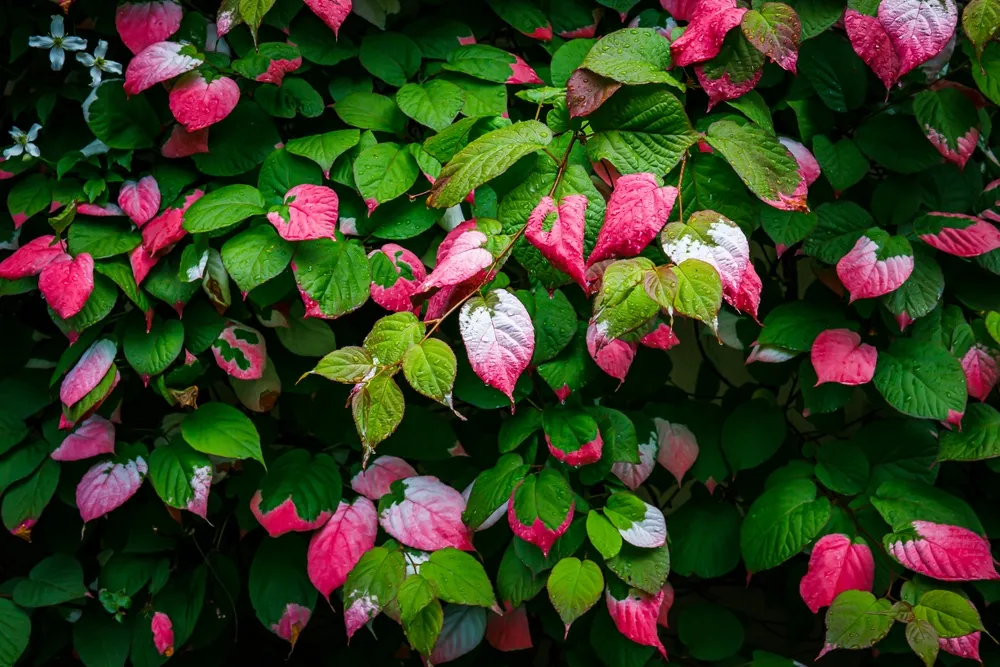
- Actinidia kolomikta: Known for its ornamental foliage, this variety is also known as variegated-leaf hardy kiwi. The fruit is small and often considered sweeter than the common kiwi.
- Actinidia polygama: Also known as silver vine, this variety is more commonly grown for its attractive foliage rather than its fruit.
Each variety has its own specific care requirements, but generally, they all need a warm, sunny spot with well-drained soil. With the right care, these varieties can thrive in the UK climate.
What is Actinidia and Where Does it Grow?

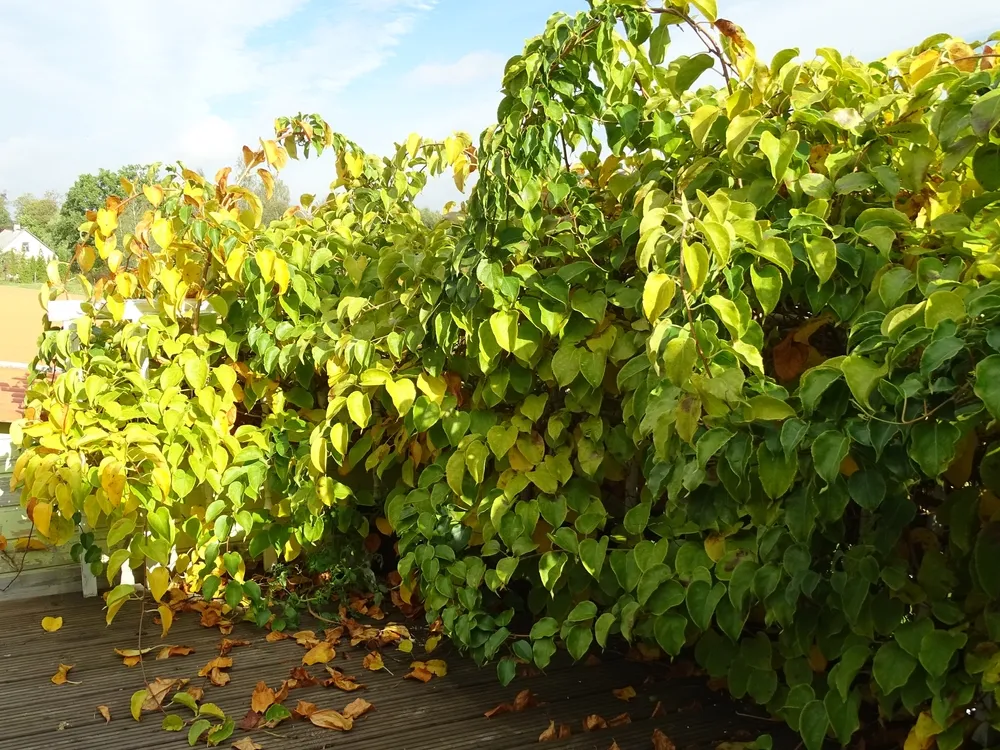
Actinidia is a genus of woody vines native to the UK and other parts of the world. It is a popular choice for gardeners and landscapers due to its attractive foliage and fragrant flowers. Actinidia is a fast-growing vine that can reach up to 10 metres in height, making it an ideal choice for covering walls and fences. The leaves of Actinidia are heart-shaped and can be either green or yellow in colour. The flowers are white and fragrant, and the fruits are edible and can be used in jams and jellies.
Pruning is an important part of caring for Actinidia. Pruning helps to keep the vine healthy and encourages new growth. Pruning should be done in late winter or early spring, before the new growth begins. Pruning should be done carefully, as the vine is delicate and can be easily damaged. Pruning should be done to remove dead or diseased branches, as well as to shape the vine and encourage new growth.
Types of Actinidia and Their Characteristics
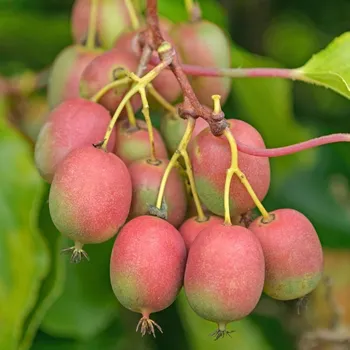
Actinidia is a genus of woody vines native to China and grown in other parts of the world including the UK. There are several species of Actinidia, each with its own unique characteristics. The most common species of Actinidia in the UK is Actinidia arguta, also known as the hardy kiwi. This species is known for its hardiness and ability to tolerate cold temperatures. It produces small, edible fruits that are similar in taste to kiwi fruit.
Another species of Actinidia found in the UK is Actinidia polygama, also known as silver vine. This species is known for its fragrant, white flowers and its ability to attract pollinators. It produces small, edible fruits that are similar in taste to kiwi fruit.
Pruning is an important part of caring for Actinidia vines. Pruning helps to keep the vines healthy and encourages new growth. It also helps to keep the vines from becoming overgrown and unmanageable. Pruning should be done in late winter or early spring, before the vines start to produce new growth.
Today, despite the UK's cooler climate, several varieties of Actinidia can be grown successfully in the country, especially in sheltered and sunny locations. They are often used as ornamental plants for their attractive foliage and climbing habit, in addition to their fruit production.
- Actinidia deliciosa: This is the most common variety of kiwi, also known as the fuzzy kiwi. It can tolerate temperatures down to about -15 degrees Celsius.
- Actinidia arguta: Also known as kiwiberry, this variety produces smaller fruit and can be grown successfully in a warm, sunny spot.
- Actinidia chinensis: This variety, also known as golden kiwi, can be grown successfully in the UK. The fruit has a smooth skin and a sweeter taste than Actinidia deliciosa.
- Actinidia kolomikta: Known for its ornamental foliage, this variety is also known as variegated-leaf hardy kiwi. The fruit is small and often considered sweeter than the common kiwi.
- Actinidia polygama: Also known as silver vine, this variety is more commonly grown for its attractive foliage rather than its fruit.
Each variety has its own specific care requirements, but generally, they all need a warm, sunny spot with well-drained soil. With the right care, these varieties can thrive in the UK climate.
How to Plant and Care for Actinidia
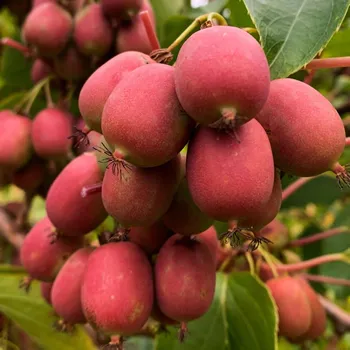
Actinidia is a beautiful and hardy plant that can be grown in the UK. It is a vigorous climber, so it is important to prune it regularly to keep it under control. Pruning should be done in late winter or early spring, when the plant is dormant. Start by removing any dead, diseased, or damaged branches, then thin out the remaining branches to create an open, airy structure. This will help to promote healthy growth and flowering. When pruning, make sure to cut back to a healthy bud or branch. This will encourage new growth and help to keep the plant in shape.
Best Time of Year to Plant Actinidia The best time to plant Actinidia vines in the UK is during the dormant season, typically between late autumn and early spring. Avoid planting in waterlogged or frozen soil.
Ideal Location Actinidia vines should be planted in a location that gets plenty of sun, preferably south- or west-facing. They also need something to climb on, like a trellis or wall. The site should be sheltered from strong winds, which can damage the plant and its fruit.
Type of Soil Required Actinidia prefers well-drained soil. While it can tolerate a range of pH levels, slightly acidic soil is ideal. Ensure the soil is rich in organic matter by adding compost or well-rotted manure before planting.
Planting Process
- Digging the Hole: Dig a hole that is twice as wide and deep as the root ball of your Actinidia vine.
- Positioning the Vine: Place the vine in the hole so that it's at the same depth it was in its pot. The graft union, if visible, should be above the soil surface.
- Backfilling: Backfill the hole with the excavated soil, mixed with compost or well-rotted manure. Firm the soil gently around the base of the vine.
- Watering: After planting, water the vine thoroughly.
Watering Needs Water regularly during dry periods in the first few years after planting. Once established, Actinidia vines are fairly drought-tolerant, but may need extra watering during fruit development.
Protection from Harsh Weather Conditions To protect your Actinidia vine from frost, you can cover it with horticultural fleece or a similar material when frost is forecasted. In windy areas, consider installing a windbreak to protect the plant. During particularly cold winters, you may want to mulch around the base of the vine to protect the roots.
Additional Care Prune your Actinidia vine in winter to maintain its shape and promote fruiting. Feed with a balanced fertilizer in spring. Monitor for pests and diseases, such as Vine Weevil or Powdery Mildew, and treat as necessary.
Remember, patience is key when growing Actinidia as it can take several years for the plant to start bearing fruit.
Common Diseases and Pests Affecting Actinidia
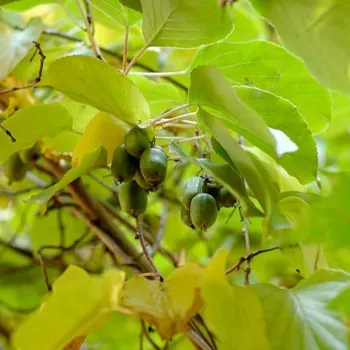
Actinidia is a popular and hardy plant in the UK, but it is not immune to common diseases and pests. Pruning is an important part of keeping your Actinidia healthy and free from disease. Pruning helps to remove dead or diseased branches, as well as to promote new growth. It is also important to keep an eye out for pests, such as Aphids, which can cause damage to the leaves and stems of the plant. If you notice any signs of pests, it is important to take action quickly to prevent further damage. Regularly checking your Actinidia for signs of disease and pests is the best way to keep it healthy and thriving.
-
1. Armillaria Root Rot (Armillaria mellea)
- Symptoms: Vines may completely collapse; white mycelial mats may appear at the base of the plant.
- Affected Parts: Roots and lower stem.
- Time of Year: Late summer to autumn when the soil is moist.
- Potential Damage: Can cause severe damage and even death in plants.
- Prevention/Treatment: Good cultural practices are key to preventing Armillaria Root Rot. Avoid waterlogging and ensure good drainage. If infection occurs, affected plants should be removed and destroyed. There is no absolute treatment for Armillaria Root Rot. The disease can be managed by the consistent removal of dead trees and infected stumps.
-
2. Leafrollers
- Symptoms: Leaves are rolled and bound by silk; caterpillars may be present inside.
- Affected Parts: Leaves.
- Time of Year: Spring and summer.
- Potential Damage: Can cause defoliation and reduced vigor, but generally considered minor pests.
- Prevention/Treatment: Regular inspection and hand removal of caterpillars can help control Leafrollers. For more severe infestations, consider using a biological insecticide.
-
3. Phytophthora Crown and Root Rot
- Symptoms: Yellowing and wilting of leaves, dieback of shoots, rotting roots.
- Affected Parts: Roots and crown.
- Time of Year: More prevalent in wet conditions.
- Potential Damage: Can cause severe damage and plant death.
- Prevention/Treatment: Ensure good drainage and avoid overwatering. Infected plants should be removed and destroyed. Fungicides may also be used.
-
4. Bacterial Blight / Bacterial Canker (Pseudomonas syringae)
- Symptoms: Leaf Spots, cankers, wilting.
- Affected Parts: Leaves, stems, fruit.
- Time of Year: More prevalent in wet, cool conditions.
- Potential Damage: Can cause defoliation, reduced yield, and plant death in severe cases.
- Prevention/Treatment: Good cultural practices like proper spacing and pruning can help prevent infection. Copper-based sprays can be used for treatment.
-
5. Thrips palmi
- Symptoms: Damage to leaves and fruits, stunted growth.
- Affected Parts: Leaves and fruits.
- Potential Damage: Can cause significant damage to the plant and reduce crop yield.
- Prevention/Treatment: Regular monitoring and use of approved pesticides can help control Thrips
Remember, a healthy plant is less likely to succumb to pests and diseases, so ensure your Actinidia vines receive appropriate care and attention. Regular monitoring, proper watering, and timely pruning can go a long way in keeping your vines healthy.
Uses and Benefits of Actinidia

Actinidia is a popular choice for UK gardeners, as it is a hardy and versatile plant that can be used in a variety of ways. Pruning is an important part of caring for Actinidia, as it helps to keep the plant healthy and encourages new growth. Pruning should be done in late winter or early spring, when the plant is dormant. This will help to keep the plant compact and encourage more flowers and fruit. When pruning, it is important to remove any dead or diseased branches, as well as any branches that are crossing or rubbing against each other. This will help to keep the plant healthy and promote new growth. Additionally, pruning can help to improve the shape of the plant and make it more aesthetically pleasing.
Actinidia is also a great choice for UK gardeners because it is a fast-growing plant that can provide a lot of shade. It can be used to create a beautiful, lush green canopy in your garden, and it can also be used to create a privacy screen. Actinidia is also a great choice for those looking to attract wildlife to their garden, as it produces a lot of nectar-rich flowers that attract bees and other pollinators. Additionally, the fruits of Actinidia are edible and can be used to make jams, jellies, and other preserves.
Tips for Growing Actinidia in the UK

Actinidia is a hardy and versatile plant that can be grown in the UK with the right care and attention. Pruning is an important part of keeping your Actinidia healthy and thriving. Pruning helps to keep the plant in shape, encourages new growth, and helps to keep the plant from becoming overgrown. Pruning should be done in late winter or early spring, when the plant is dormant. Start by removing any dead or diseased branches, then thin out the canopy to allow more light and air to reach the inner branches. This will help to promote healthy growth and flowering. Finally, prune back any branches that are growing in an undesirable direction. With regular pruning, your Actinidia will be a beautiful addition to your garden for years to come.
Why Feed and Mulch Actinidia Vines?
Feeding provides necessary nutrients that may not be present in the soil, supporting healthy growth and fruitful yields. Mulching helps to retain soil moisture, suppress weeds, and can also provide additional nutrients as it breaks down.
Ideal Time for FeedingThe best time to feed Actinidia vines is in early spring, just before new growth starts. This gives the plant a nutrient boost to support vigorous growth and fruit production.
Challenges in FeedingOverfeeding can lead to excessive vegetative growth at the expense of fruit production. It's essential to strike a balance – enough feed to support growth and health, but not so much that it discourages fruiting.
Types of Mulch Suitable for ActinidiaOrganic mulches are ideal for Actinidia vines. These include compost, well-rotted manure, leaf mould, or wood chips. Organic mulches enrich the soil with nutrients as they break down and improve soil structure, which benefits Actinidia vines, which prefer fertile, well-drained soil.
Role of MulchMulch acts as an insulating layer, protecting the roots from temperature extremes. It also helps to retain moisture and suppresses weed growth, reducing competition for nutrients.
Feeding Methods and AmountsUse a balanced granular fertilizer, following package instructions for the correct amount. Spread it around the base of the vine, avoiding the stem, then water in.
Feeding Actinidia vines, also known as Kiwi vines, require a balanced approach. Different growers have their own ideas on the best fertilizer for kiwi vines, but experts suggest a few common tips.
A formulated citrus and avocado fertilizer can be used, as it contains the necessary nutrients for the kiwi vine's growth and fruit production.
Another recommendation is to feed established plants sparingly in spring when the plants are dormant and then just after they bloom in early June, with a general-purpose (10-10-10) fertilizer.
In the kiwi's second year, Stark® Tre-Pep® Fertilizer is recommended. This should be applied twice per year with one gallon of solution per vine.
Young kiwi plants can grow well with 2 ounces of nitrogen fertilizer applied per year, but plants 6 years and older require up to 1 pound of nitrogen fertilizer per year.
Kiwifruit vines grow best in a well-drained, aerated, and moisture-holding soil that is slightly acidic to neutral (pH 5.5-7.5), and rich in organic matter.
It's important to remember that Kiwi roots are sensitive to fertilizer, so always use a slow release fertilizer when feeding. An all-purpose, slow-release fertilizer can be applied at the beginning of the growing season.
Overall, the best feed for Actinidia vines depends on the age of the plant, soil conditions, and specific nutrient requirements. It's always a good idea to perform a soil test before applying any fertilizer to understand what nutrients your soil is lacking.
Considerations While MulchingEnsure the ground is moist before you apply mulch. Spread it to a depth of about 5-7.5cm (2-3 inches), keeping it a few centimetres away from the stem to avoid rot. Refresh the mulch layer annually, or when it starts to thin out.
UK Climate and Soil ConditionsThe UK's climate varies, but is generally temperate with adequate rainfall. Its soils range from sandy to clay, with pH levels from acidic to alkaline. Actinidia vines prefer fertile, well-drained soil and a sheltered, sunny location. Tailor your watering, feeding, and mulching practices accordingly.
For example, in sandy soil which drains quickly, you may need to water and feed more frequently. In heavy clay soil, improve drainage by adding organic matter to prevent waterlogging. In very acidic or alkaline soils, you might need to adjust the pH for optimum growth.
Remember, every garden is unique, so observe your plants and adjust your care routine as needed.
In conclusion, Actinidia is a versatile and hardy plant that can be grown in the UK with the right care and attention. It is a great addition to any garden, providing a range of benefits such as edible fruits, attractive foliage, and a natural pest repellent. With proper planting and pruning techniques, Actinidia can be grown successfully in the UK and can provide a great source of food and beauty. While there are some common diseases and pests that can affect Actinidia, these can be managed with proper care and preventative measures. With the right knowledge and care, Actinidia can be a great addition to any garden in the UK.
A Comprehensive Guide on How to Prune the Vine Actinidia in the UK

If you're looking for a comprehensive guide on how to prune the Vine Actinidia in the UK, you've come to the right place. Pruning the Vine Actinidia is an important part of keeping your garden looking its best, and with the right knowledge and tools, it can be a rewarding experience. In this guide, we'll cover everything you need to know about pruning the Vine Actinidia, from the best time of year to prune, to the tools and techniques you'll need to get the job done. With this guide, you'll be able to confidently prune your Vine Actinidia and keep your garden looking beautiful.
When is the Best Time to Prune Actinidia Vines?

When it comes to pruning the vine Actinidia, timing is everything. Pruning at the wrong time can cause damage to the vine and reduce its yield. To ensure your Actinidia vines are healthy and productive, it is important to prune them at the right time. In the UK, the best time to prune Actinidia vines is in late winter or early spring. This is when the vines are dormant and the risk of frost is low.
When pruning, it is important to remove any dead, diseased, or damaged branches. This will help to promote healthy growth and encourage the vine to produce more fruit. Additionally, it is important to thin out the vine to allow for more air circulation and sunlight. This will help to prevent disease and encourage the vine to produce more fruit. Finally, it is important to prune the vine to the desired shape and size. This will help to keep the vine manageable and ensure it produces a good yield.
What Tools are Needed for Pruning Actinidia Vines?

When it comes to pruning the vine Actinidia, it is important to have the right tools for the job. The most important tool you will need is a pair of sharp, clean pruning shears. These shears should be able to cut through the thick stems of the vine without damaging them. You will also need a pair of loppers to reach higher branches and a pruning saw for larger branches. Additionally, you may want to invest in a pole pruner to help you reach higher branches. Finally, you will need a ladder to help you reach the highest branches.
It is also important to have the right safety equipment when pruning the vine Actinidia. Make sure you wear protective gloves, eye protection, and a hard hat to protect yourself from falling branches. Additionally, you should always use a harness when working at heights. With the right tools and safety equipment, you can prune the vine Actinidia safely and effectively.
Secateurs, loppers, and saws are essential tools for maintaining healthy bushes, trees, and shrubs. Each tool has its own unique purpose and can be used for different pruning needs:
Secateurs: Secateurs, also known as pruning shears, are hand-held cutting tools used for pruning small branches and stems up to ¾ inch in diameter. They come in various sizes and types, including bypass, anvil, and ratchet. Bypass secateurs are the most common, and they work like scissors with two curved blades that slide against each other. Secateurs are useful for precise cuts in tight spaces, such as when pruning shrubs or roses.
Loppers: Loppers are also cutting tools, but they are used for pruning thicker branches up to 2 inches in diameter. They feature long handles and come in bypass, anvil, and ratchet styles. Bypass loppers work like secateurs, but with longer handles, making it easier to reach higher branches. Anvil loppers use a blade that cuts against a flat surface, much like a knife on a cutting board. Ratchet loppers use a mechanism that multiplies the user's strength, making it easier to cut through thick branches.
Saws: Pruning saws come in various shapes and sizes, but they all have serrated blades that can be used to cut larger branches or stems that are too thick for secateurs or loppers. There are two main types of pruning saws: hand-held saws and pole saws. Hand-held pruning saws are similar to regular handsaws but with a narrow blade. Pole pruning saws have a long handle that can reach faraway branches without the need for a ladder.
Having all three of these tools in your gardening arsenal will help you keep your bushes, trees, and shrubs in top shape. Each tool has its own unique strengths and uses, and knowing when and how to use them will make your pruning tasks much easier and efficient.
How to Make the Right Cuts When Pruning Actinidia Vines

When it comes to pruning the vine Actinidia, it is important to make the right cuts. This is because the wrong cuts can lead to the vine not producing the desired fruit or flowers. To ensure that you make the right cuts, it is important to understand the anatomy of the vine. The vine has two main parts: the trunk and the branches. The trunk is the main stem of the vine and the branches are the smaller stems that grow from the trunk. When pruning the vine, it is important to make sure that the trunk is not damaged. This is because the trunk is the main source of nutrients for the vine.
When pruning the vine, it is important to make sure that the cuts are made at the right angle. This is because the angle of the cut will determine how much of the vine is removed. It is also important to make sure that the cuts are made at the right depth. This is because the depth of the cut will determine how much of the vine is removed. Finally, it is important to make sure that the cuts are made in the right place. This is because the location of the cut will determine how much of the vine is removed.
Pruning Actinidia vines, or Kiwi vines, is crucial for maintaining plant health, encouraging fruitful yields, and controlling their vigorous growth. Here's a step-by-step guide on how to make the right cuts when pruning these vines:
-
1. Choose the Right Time:
Winter is generally the best time for pruning kiwi vine side branches (source). However, vines also need to be sheared during the growing season to keep them under control (source). -
2. Remove Side Shoots:
As the plant grows, remove side shoots so you have one main shoot (source). This helps direct energy to the main vine. -
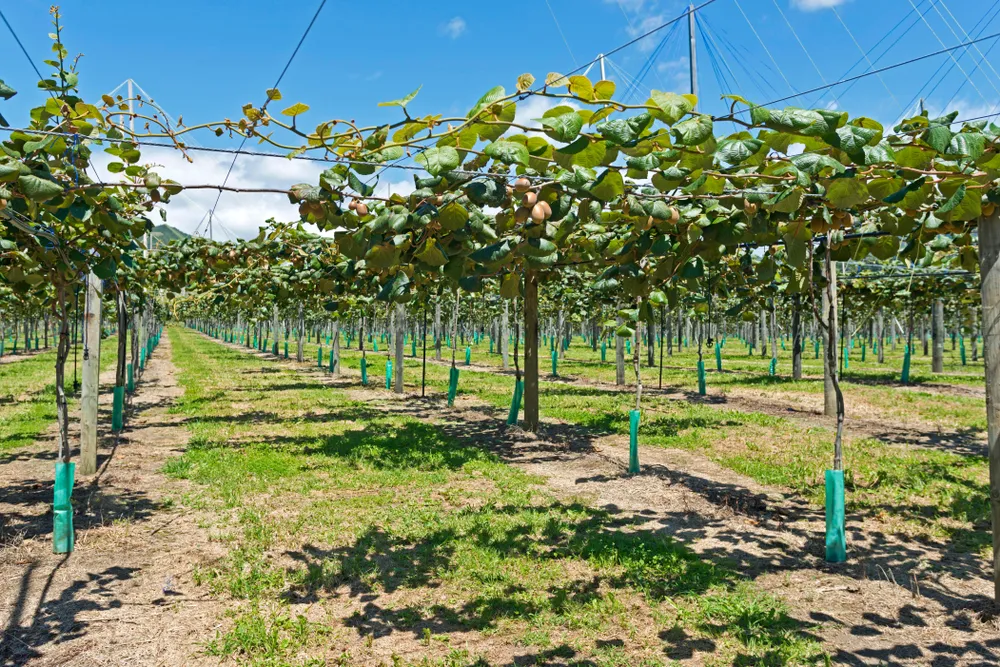
3. Prune Branches Along the Wires:
Cut back side branches along the wires to a point where the stems are about 1/4 inch (6 mm) thick (source). -
4. Maintain a Single Trunk:
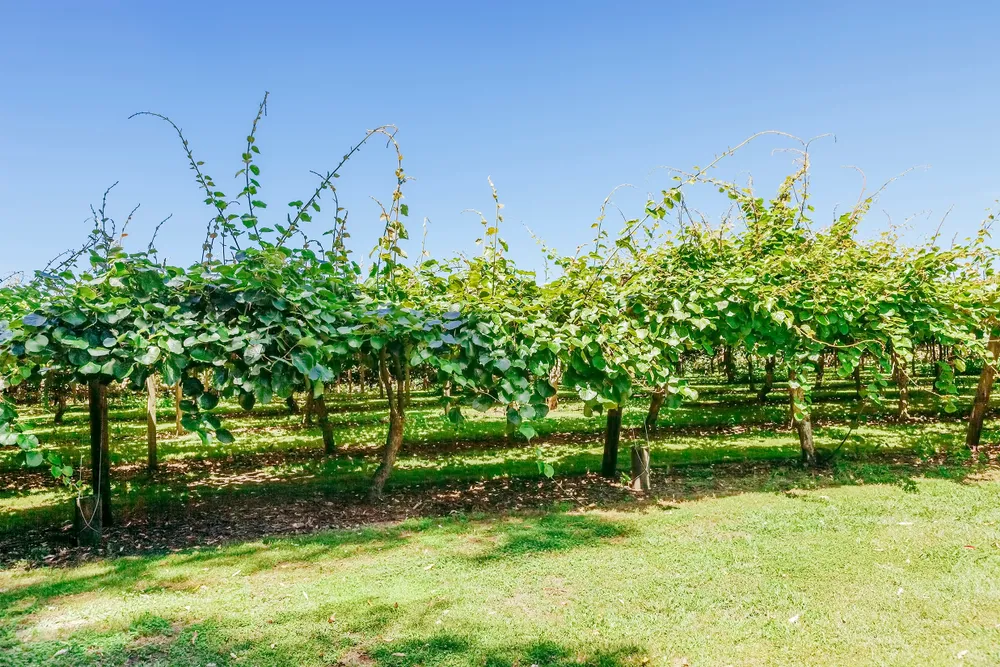
Your vine should have a single trunk forming a strong base. This trunk is not pruned unless it becomes weak or injured. From the trunk, two main branches should be trained along support wires (source). -
5. Prune at 45-degree Angles:
When you're pruning out these branches, use sharp, sterilized pruners. Make the cuts at 45-degree angles about one inch (2.5 cm) from the stem (source). -
6. Prune One Stem Section at a Time:
Instead of removing large sections all at once, prune one stem section at a time until you've cut out all you want to remove (source).
Remember, proper pruning is essential for controlling the vigorous growth of kiwi vines and encouraging better fruit production. Always make sure your cutting tools are sharp and clean to avoid spreading diseases. If you're unsure about making the right cuts, consider seeking advice from a local horticulturist or extension service.
By following these tips, you can ensure that you make the right cuts when pruning the vine Actinidia in the UK. This will help you to ensure that the vine produces the desired fruit or flowers.
Hard Pruning the Actinidia vines
You can hard prune Actinidia vines, but it should be done with care. These vines are vigorous growers and can handle a significant amount of pruning. However, keep in mind that hard pruning may temporarily reduce the production of flowers and fruits.
Here's how you can go about hard pruning your Actinidia vine:- 1. Choose the right time: The best time to hard prune Actinidia is late winter or early spring when the plant is dormant but before the new growth begins (source).
- 2. Identify old wood: Start by identifying the old wood, which is usually darker and thicker. This is the part of the vine that you'll want to focus your pruning efforts on.
- 3. Make the cuts: With sharp, sterilized pruning shears, make your cuts. Remove any dead, diseased, or damaged wood first. Then, trim back the remaining old wood, leaving the newer, lighter-colored wood.
- 4. Leave some buds: Make sure to leave a few buds on each of the remaining branches. This will ensure that the vine can still produce new growth in the spring.
- 5. Clean up: After you've finished pruning, clean up any debris from around the base of the plant. This will help to prevent any diseases or pests from taking hold.
Remember, while Actinidia vines can tolerate hard pruning, it's important to not overdo it. If you're unsure, it's always better to err on the side of less pruning rather than more. And keep in mind that after a hard prune, it may take a couple of seasons for your vine to fully recover and start producing a normal amount of fruit again.
Helpful Tips for Pruning Actinidia Vines

When it comes to pruning the vine Actinidia, it is important to take the time to do it correctly. Pruning the vine Actinidia can be a tricky process, but with the right tips and tricks, you can ensure that your vine is healthy and thriving. Here are some helpful tips for pruning the vine Actinidia in the UK:
First, it is important to prune the vine Actinidia at the right time of year. The best time to prune the vine Actinidia is in late winter or early spring, when the vine is still dormant. This will help to ensure that the vine is not damaged by the cold weather.
Second, it is important to prune the vine Actinidia correctly. When pruning the vine Actinidia, it is important to remove any dead or diseased branches, as well as any branches that are growing in an undesirable direction. It is also important to prune the vine Actinidia in a way that encourages new growth.
Finally, it is important to use the right tools when pruning the vine Actinidia. It is best to use sharp, clean pruning shears to ensure that the vine is not damaged during the pruning process. Additionally, it is important to wear protective gloves and clothing when pruning the vine Actinidia, as the thorns on the vine can be sharp and cause injury.
By following these tips, you can ensure that your vine Actinidia is healthy and thriving. Pruning the vine Actinidia correctly can help to ensure that your vine is able to produce healthy fruit and flowers for years to come.
Common Mistakes to Avoid When Pruning Actinidia Vines

When it comes to pruning the vine Actinidia, it is important to take the time to do it correctly. If done incorrectly, it can lead to a number of issues, such as stunted growth, poor fruit production, and even death of the vine. To ensure that your Actinidia vine is healthy and thriving, here are some common mistakes to avoid when pruning:
First, it is important to avoid pruning too early in the season. Pruning too early can cause the vine to become weak and vulnerable to disease. It is best to wait until late winter or early spring to prune the vine.
Second, it is important to avoid pruning too much. Pruning too much can cause the vine to become stressed and can lead to poor fruit production. It is best to prune only the dead or damaged branches and to leave the healthy ones intact.
Finally, it is important to avoid pruning the wrong way. Pruning the wrong way can cause the vine to become damaged and can lead to stunted growth. It is best to use sharp pruning shears and to make sure that the cuts are clean and even.
By following these tips, you can ensure that your Actinidia vine is healthy and thriving. With proper pruning, you can enjoy a bountiful harvest of delicious fruit.
In conclusion, pruning the vine Actinidia in the UK is a straightforward process that requires the right timing, tools, and techniques. By following the steps outlined in this guide, you can ensure that your Actinidia vines are properly pruned and remain healthy. Additionally, it is important to be aware of common mistakes to avoid when pruning Actinidia vines, such as cutting too much or too little. With the right knowledge and preparation, you can successfully prune your Actinidia vines and enjoy the fruits of your labor. So, take the time to learn how to prune the vine Actinidia in the UK and reap the rewards of a healthy and thriving vine.
Frequently Asked Questions About the Actinidia Vine

FAQ Questions and Answers:
- Q1: What is Actinidia and where does it grow? A1: Actinidia is a genus of woody vines native to China and Japan. It is commonly grown in the UK for its edible fruits, which are known as kiwifruit. Actinidia grows best in well-drained, fertile soil in a sunny or partially shaded position.
- Q2: What are the different types of Actinidia and what are their characteristics? A2: There are several species of Actinidia, including Actinidia deliciosa, Actinidia chinensis, and Actinidia arguta. Actinidia deliciosa is the most common species grown in the UK and produces the familiar kiwifruit. Actinidia chinensis produces smaller, rounder fruits, while Actinidia arguta produces elongated, tart fruits. All species of Actinidia are vigorous climbers and can reach heights of up to 10 metres.
- Q3: How do I plant and care for Actinidia? A3: Plant Actinidia in well-drained, fertile soil in a sunny or partially shaded position. Water regularly and mulch around the base of the plant to retain moisture. Prune Actinidia in late winter or early spring to encourage new growth and to keep the plant under control.
- Q4: What common diseases and pests affect Actinidia? A4: Common diseases affecting Actinidia include Powdery Mildew, Leaf Spot, and Root Rot. Common pests include Aphids, mealybugs, and scale insects. To prevent and control these pests and diseases, keep the area around the plant free of weeds and debris, and use an appropriate insecticide or fungicide as needed.
- Q5: What are the uses and benefits of Actinidia? A5: Actinidia fruits are edible and can be eaten fresh or used in jams, jellies, and other recipes. The leaves and stems of Actinidia can also be used to make tea. Actinidia is also a popular ornamental plant, with its attractive foliage and fragrant flowers.
- Q6: What tips should I follow when growing Actinidia in the UK? A6: When growing Actinidia in the UK, it is important to choose a sunny or partially shaded position and to provide well-drained, fertile soil. Water and mulch regularly, and prune in late winter or early spring to keep the plant healthy and under control. Regularly check for signs of pests and diseases, and take prompt action if necessary. With proper care, Actinidia can thrive in the UK climate and provide a range of benefits to your garden. Overall, Actinidia is a versatile and beneficial plant that can enhance any garden in the UK. With the right care and attention, you can enjoy its fruits, flowers, and foliage for years to come. So why not consider adding Actinidia to your garden this year?
- Q7: What is the best time of year to prune Actinidia vines in the UK? A7: The best time to prune Actinidia vines in the UK is during the late winter or early spring, when the vines are still dormant. This will help ensure that the vines have enough time to recover and produce healthy new growth.
- Q8: What tools are needed for pruning Actinidia vines? A8: Pruning Actinidia vines requires a few basic tools, including a pair of sharp pruning shears, a pair of loppers, and a pruning saw. It is also helpful to have a ladder or step stool to reach higher branches.
- Q9: How do I make the right cuts when pruning Actinidia vines? A9: When pruning Actinidia vines, it is important to make clean, angled cuts at a 45-degree angle. This will help promote healthy new growth and prevent disease.
- Q10: What are some helpful tips for pruning Actinidia vines? A10: When pruning Actinidia vines, it is important to remove any dead, diseased, or damaged branches. It is also important to prune the vines in a way that will promote air circulation and light penetration. Additionally, it is important to prune the vines in a way that will maintain the desired shape and size.
- Q11: What are some common mistakes to avoid when pruning Actinidia vines? A11: When pruning Actinidia vines, it is important to avoid making too many cuts at once, as this can weaken the vine. Additionally, it is important to avoid pruning the vines too late in the season, as this can cause the vines to become stressed and produce fewer fruits.
- Q12: How often should I prune Actinidia vines? A12: Actinidia vines should be pruned once a year, typically in late winter or early spring. This will help ensure that the vines remain healthy and produce plenty of fruits.
- Q13: What is the best way to dispose of the pruned branches? A13: Pruned branches should be disposed of in a responsible manner, such as by composting or mulching. It is important to avoid burning the branches, as this can release harmful toxins into the air. Additionally, check with your local council for any specific guidelines on disposing of green waste. Overall, the key is to properly dispose of the branches without causing harm to the environment.
- Q14: Can I prune Actinidia vines during other seasons besides late winter or early spring? A14: It is not recommended to prune Actinidia vines during other seasons as this can cause stress and damage to the vines. However, if necessary, light pruning can be done in late summer or early autumn to remove any unwanted growth or dead branches. It is important to avoid heavy pruning during these seasons. If you have a specific concern about your Actinidia vine, it is best to consult with a local gardening expert for advice before making any major cuts. With proper care and pruning, your Actinidia vine will continue to thrive and produce tasty fruit for years to come. Overall, it is important to properly prune your Actinidia vines in order to maintain their health and productivity. By following the tips outlined in this guide and avoiding common mistakes, you can ensure a successful pruning process and enjoy a flourishing vine. Remember to always use sharp tools, make clean cuts, and prune during the appropriate time of year. And if you have any further questions or concerns, don't hesitate to consult with a local gardening expert for personalized advice. Happy pruning! Happy gardening!
How to Prune Climbing Vines
List by Variety
- How to Prune Actinidia
- How to Prune Akebia
- How to Prune Bougainvillea
- How to Prune Campsis
- How to Prune Celastrus
- How to Prune Chilean Glory Vine
- How to Prune Clematis Armandii
- How to Prune Clematis Montana
- How to Prune Climbing Rose
- How to Prune Hedera GoldHeart
- How to Prune Honeysuckle
- How to Prune Hydrangea Petiolaris
- How to Prune Ivy
- How to Prune Japanese Wisteria
- How to Prune Morning Glory
- How to Prune Parthenocissus
- How to Prune Persian Ivy Hedera Colchica
- How to Prune Schisandra
- How to Prune Star Jasmine
- How to Prune Sweet Peas
- How to Prune True Jasmine
- How to Prune Virginia Creeper
- How to Prune Wisteria
How to Prune Hedges
List by Variety
- How to Prune an Arborvitae Hedge
- How to Prune a Barberry Hedge
- How to Prune a Beech Hedge
- How to Prune a Boxwood Hedge
- How to Prune a Butterfly Bush Hedge
- How to Prune a Cotoneaster Hedge
- How to Prune an English Lavender Hedge
- How to Prune an Escallonia Hedge
- How to Prune an Euonymus-Hedge
- How to Prune a Firethorn Hedge
- How to Prune a Forsythia Hedge
- How to Prune a Griselinia Hedge
- How to Prune a Hawthorn Hedge
- How to Prune a Holly Hedge
- How to Prune a Hornbeam Hedge
- How to Prune a Laurel Hedge
- How to Prune a Leylandii Hedge
- How to Prune a Lilac Hedge
- How to Prune a Maple Leaf Viburnum Hedge
- How to Prune a Photinia Hedge
- How to Prune a Pink Ramanus Rose Hedge
- How to Prune a Privet Hedge
- How to Prune a Pyracantha Hedge
- How to Prune a Spirea Hedge
- How to Prune a Thuja Hedge
- How to Prune a Viburnum Hedge
- How to Prune a Western Red Cedar Hedge
- How to Prune a Yew Hedge
How to Prune Shrubs
List by Variety
- How to Prune an Abelia Shrub
- How to Prune an Abutilon
- How to Prune an Acer / Japanese-Maple
- How to Prune an Amelanchiers
- How to Prune an Apple-Tree
- How to Prune an Arbovitae Shrub
- How to Prune an Arbutus
- How to Prune an Aucuba
- How to Prune a Azalea Mollis
- How to Prune Azaleas
- How to Prune a Bay Tree Shrub
- How to Prune a Berberis Darwinii
- How to Prune Berberis Deciduous Types
- How to Prune a Boxwood Shrubs
- How to Prune a Brachyglottis Senecio
- How to Prune a Buddleia Alternifolia
- How to Prune Buddleias Butterfly Bushes
- How to Prune a Buddleja Globosa
- How to Prune a Callicarpa
- How to Prune a Camellia
- How to Prune a Caryopteris
- How to Prune a Catalpa Bignonioides Aurea
- How to Prune Ceanothus Deciduous Types
- How to Prune Ceanothus Evergreen Types
- How to Prune a Ceratostigma
- How to Prune a Chaenomeles
- How to Prune a Choisya
- How to Prune a Cistus
- How to Prune a Clematis
- How to Prune a Cornus
- How to Prune a Cotinus Royal Purple
- How to Prune a Cytisus Scoparius
- How to Prune a Exochorda x Macrantha
- How to Prune a Forsythia
- How to Prune a Hebe
- How to Prune a Hydrangeas
- How to Prune Juniper Shrubs
- How to Prune a Lavatera
- How to Prune Lilac Bushes
- How to Prune a Mugo Pine
- How to Prune Rose Bushes
- How to Prune Spirea Shrubs
- How to Prune Viburnum Shrubs
- How to Prune a Weigela
- How to Prune a Yew
How to Prune Trees
List by Variety
- How to Prune a Apple Tree
- How to Prune a Apricot Tree
- How to Prune a Ash Tree
- How to Prune a Birch Tree
- How to Prune a Cherry Tree
- How to Prune a Elm Tree
- How to Prune a Fig Tree
- How to Prune a Grape Tree
- How to Prune a Hickory Tree
- How to Prune a Maple Tree
- How to Prune a Oak Tree
- How to Prune an Olive Tree
- How to Prune a Peach Tree
- How to Prune a Pear Tree
- How to Prune a Plum Tree
- How to Prune a Poplar Tree
- How to Prune a Walnut Tree
How to Prune Climbing Vines
List by Variety
- How to Prune Actinidia
- How to Prune Akebia
- How to Prune Bougainvillea
- How to Prune Campsis
- How to Prune Celastrus
- How to Prune Chilean Glory Vine
- How to Prune Clematis Armandii
- How to Prune Clematis Montana
- How to Prune Climbing Rose
- How to Prune Hedera GoldHeart
- How to Prune Honeysuckle
- How to Prune Hydrangea Petiolaris
- How to Prune Ivy
- How to Prune Japanese Wisteria
- How to Prune Morning Glory
- How to Prune Parthenocissus
- How to Prune Persian Ivy Hedera Colchica
- How to Prune Schisandra
- How to Prune Star Jasmine
- How to Prune Sweet Peas
- How to Prune True Jasmine
- How to Prune Virginia Creeper
- How to Prune Wisteria
How to Prune Hedges
List by Variety
- How to Prune an Arborvitae Hedge
- How to Prune a Barberry Hedge
- How to Prune a Beech Hedge
- How to Prune a Boxwood Hedge
- How to Prune a Butterfly Bush Hedge
- How to Prune a Cotoneaster Hedge
- How to Prune an English Lavender Hedge
- How to Prune an Escallonia Hedge
- How to Prune an Euonymus-Hedge
- How to Prune a Firethorn Hedge
- How to Prune a Forsythia Hedge
- How to Prune a Griselinia Hedge
- How to Prune a Hawthorn Hedge
- How to Prune a Holly Hedge
- How to Prune a Hornbeam Hedge
- How to Prune a Laurel Hedge
- How to Prune a Leylandii Hedge
- How to Prune a Lilac Hedge
- How to Prune a Maple Leaf Viburnum Hedge
- How to Prune a Photinia Hedge
- How to Prune a Pink Ramanus Rose Hedge
- How to Prune a Privet Hedge
- How to Prune a Pyracantha Hedge
- How to Prune a Spirea Hedge
- How to Prune a Thuja Hedge
- How to Prune a Viburnum Hedge
- How to Prune a Western Red Cedar Hedge
- How to Prune a Yew Hedge
How to Prune Shrubs
List by Variety
- How to Prune an Abelia Shrub
- How to Prune an Abutilon
- How to Prune an Acer / Japanese-Maple
- How to Prune an Amelanchiers
- How to Prune an Apple-Tree
- How to Prune an Arbovitae Shrub
- How to Prune an Arbutus
- How to Prune an Aucuba
- How to Prune a Azalea Mollis
- How to Prune Azaleas
- How to Prune a Bay Tree Shrub
- How to Prune a Berberis Darwinii
- How to Prune Berberis Deciduous Types
- How to Prune a Boxwood Shrubs
- How to Prune a Brachyglottis Senecio
- How to Prune a Buddleia Alternifolia
- How to Prune Buddleias Butterfly Bushes
- How to Prune a Buddleja Globosa
- How to Prune a Callicarpa
- How to Prune a Camellia
- How to Prune a Caryopteris
- How to Prune a Catalpa Bignonioides Aurea
- How to Prune Ceanothus Deciduous Types
- How to Prune Ceanothus Evergreen Types
- How to Prune a Ceratostigma
- How to Prune a Chaenomeles
- How to Prune a Choisya
- How to Prune a Cistus
- How to Prune a Clematis
- How to Prune a Cornus
- How to Prune a Cotinus Royal Purple
- How to Prune a Cytisus Scoparius
- How to Prune a Exochorda x Macrantha
- How to Prune a Forsythia
- How to Prune a Hebe
- How to Prune a Hydrangeas
- How to Prune Juniper Shrubs
- How to Prune a Lavatera
- How to Prune Lilac Bushes
- How to Prune a Mugo Pine
- How to Prune Rose Bushes
- How to Prune Spirea Shrubs
- How to Prune Viburnum Shrubs
- How to Prune a Weigela
- How to Prune a Yew
How to Prune Trees
List by Variety
- How to Prune a Apple Tree
- How to Prune a Apricot Tree
- How to Prune a Ash Tree
- How to Prune a Birch Tree
- How to Prune a Cherry Tree
- How to Prune a Elm Tree
- How to Prune a Fig Tree
- How to Prune a Grape Tree
- How to Prune a Hickory Tree
- How to Prune a Maple Tree
- How to Prune a Oak Tree
- How to Prune an Olive Tree
- How to Prune a Peach Tree
- How to Prune a Pear Tree
- How to Prune a Plum Tree
- How to Prune a Poplar Tree
- How to Prune a Walnut Tree
Gallery
Necessitatibus eius consequatur ex aliquid fuga eum quidem sint consectetur velit











Michael Carter
Vestibulum ante ipsum primis in faucibus orci luctus et ultrices posuere cubilia curae; Donec vel erat in nulla efficitur tempor non ut nisl. Integer venenatis eros ut dui viverra fermentum.
Sophie Wilson
Nam ut turpis hendrerit, varius nunc vel, elementum dui. Morbi vulputate dolor sit amet scelerisque egestas. Vestibulum eleifend nunc ut bibendum fermentum.
Alex Morgan
Cras non velit nec purus tempor rhoncus. Sed non mauris vitae erat consequat auctor eu in elit. Class aptent taciti sociosqu ad litora torquent per conubia nostra.