Everything You Need To Know About The Gypsy Moth Caterpillars
Gypsy Moth Caterpillars: A UK Gardener's Guide to Spongy Moths
Gypsy Moth Caterpillars
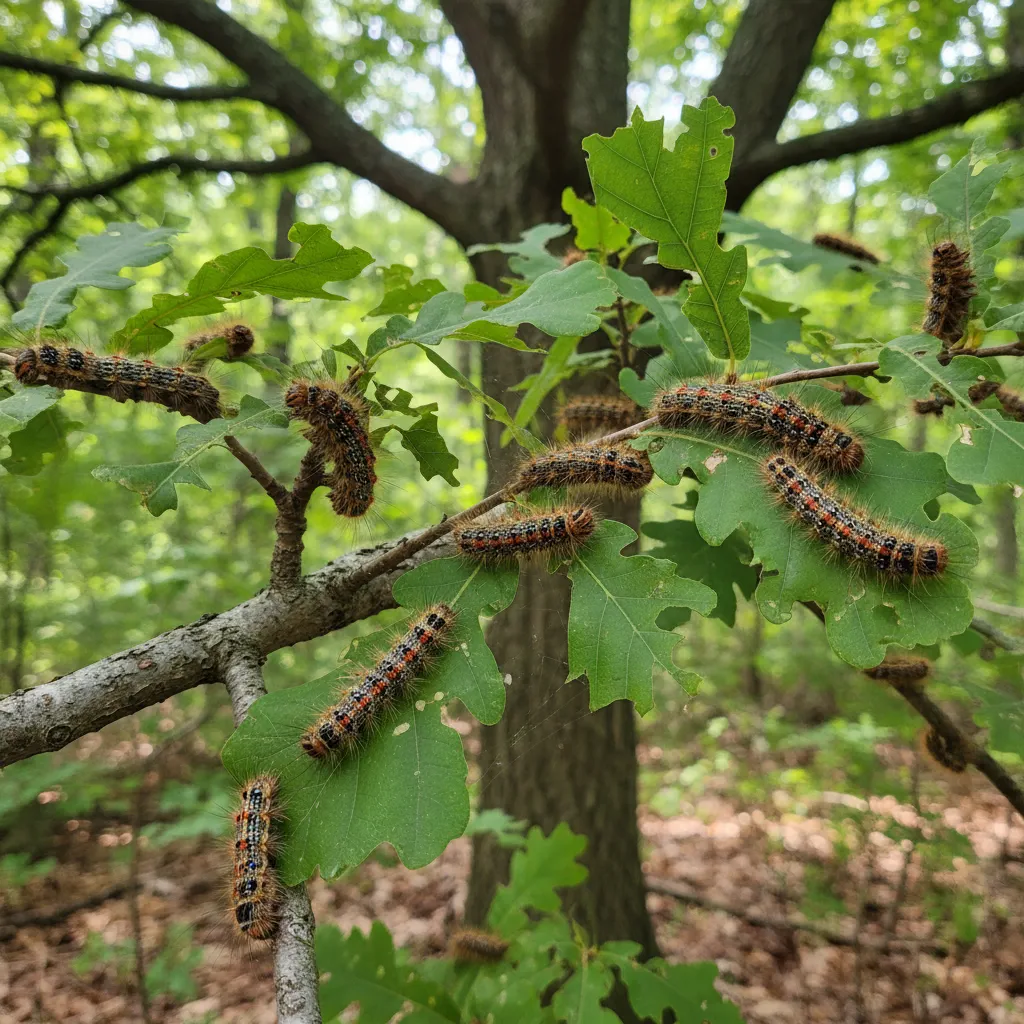
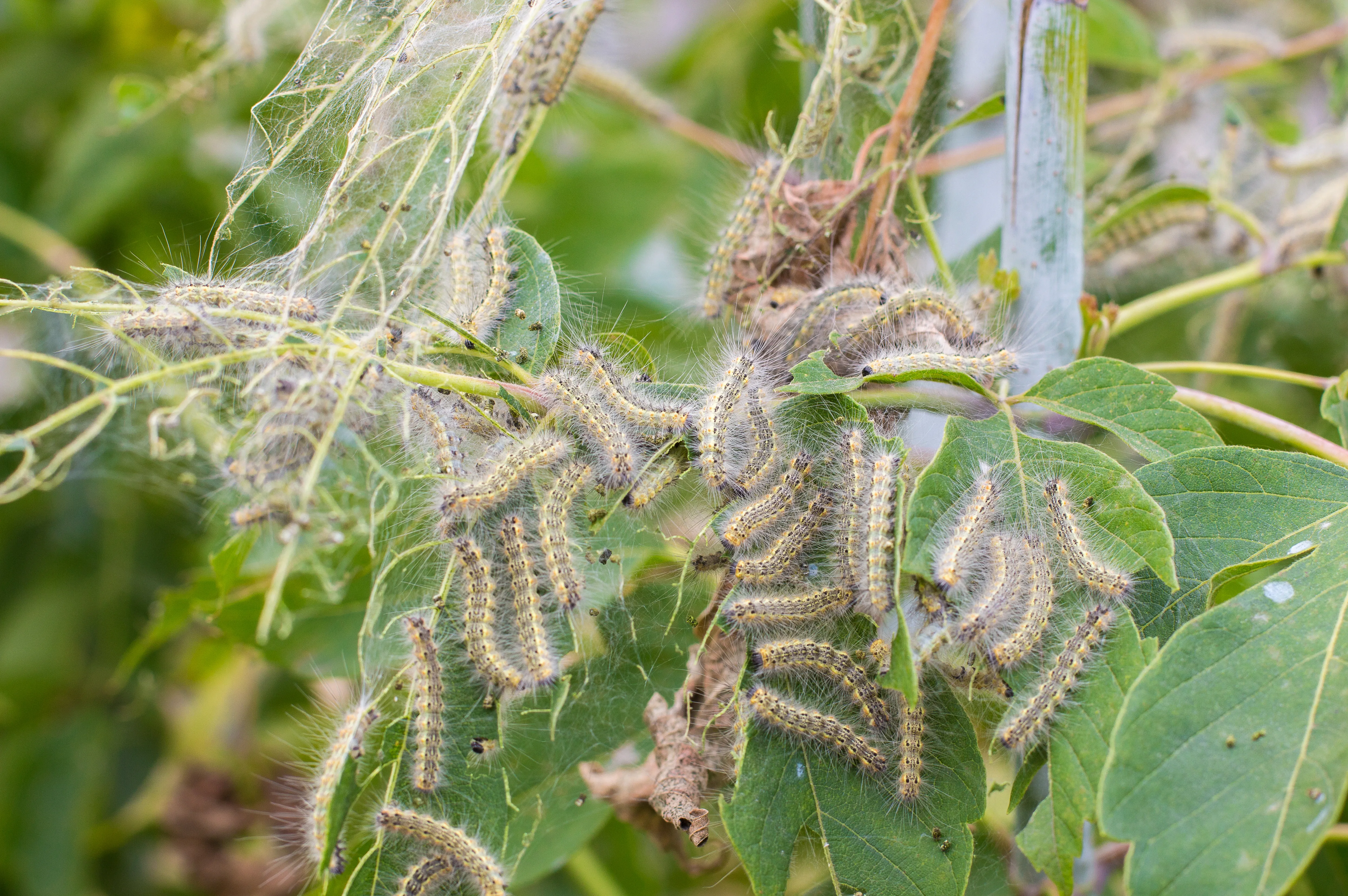
You step out into your garden on a crisp spring morning, tea in hand, ready to admire the fresh foliage on your beloved oak tree or prized beech hedge. Instead of vibrant green leaves, you are greeted by bare branches and a horrifying sight: hundreds of voracious, hairy pests munching their way through the canopy. For any passionate UK gardener, waking up to severe defoliation is a genuine nightmare.
The primary culprits behind this relentless leaf-stripping are Gypsy Moth Caterpillars. Recently renamed Spongy Moths, these insects, scientifically known as Lymantria dispar, are an undeniable marvel of nature. They possess incredibly complex lifecycles and striking physical features. Unfortunately, they can also cause serious defoliation in UK gardens, particularly for those living in London and the South East.
Understanding these fascinating insects is the absolute key to protecting your prized trees. You want to save your favourite plants, but you also need to ensure you do not harm the garden's delicate, interconnected ecosystem in the process. Panic-spraying harsh chemicals often causes more problems than it solves, disrupting the natural predators that act as your best line of defence.
This comprehensive guide will walk you through everything you need to know about these hungry visitors. We will explore the fascinating history and recent name change of the moth, teach you how to confidently identify them at every stage of their lifecycle, and explain the true impact they have on your garden plants. Finally, we will provide essential health and safety advice, alongside a step-by-step guide to managing Gypsy Moth Caterpillars effectively and naturally.
What’s in a Name? From Gypsy Moth to Spongy Moth
Gypsy Moth Caterpillars
If you have been reading up on garden pests recently, you might have noticed a shift in terminology. The entomological community officially changed the common name from "Gypsy Moth" to "Spongy Moth". This update reflects a broader effort to use more descriptive and less culturally sensitive names for insects. Both names refer to the exact same species (Lymantria dispar), and you will often hear them used interchangeably among gardeners and tree care professionals. The new name cleverly references the sponge-like appearance of the moth's egg masses.
To truly understand this pest, we need to look at its history. The Spongy Moth is native to Europe, Asia, and North Africa. Over 130 years ago, they were accidentally introduced to North America during a failed silk-spinning experiment. Without their natural predators to keep them in check, they quickly escaped into the wild and became a major invasive pest, stripping millions of acres of forest across the United States.
The story of their presence in the UK is quite different, but equally intriguing. The native British strain of the moth actually went extinct in the early 1900s, largely due to changing land management practices. However, a European strain established a small but stubborn breeding population in London in the mid-1990s. Since then, they have been slowly but steadily spreading through the South East of England, aided by milder winters and abundant food sources in our urban and suburban gardens.
Spotting the Suspects: Identification Guide
Gypsy Moth Caterpillars
Accurate identification is the foundation of any good pest management strategy. You need to know exactly what you are dealing with before taking action. Here is how you can spot Spongy Moths at every stage of their development.
The Eggs (Winter)
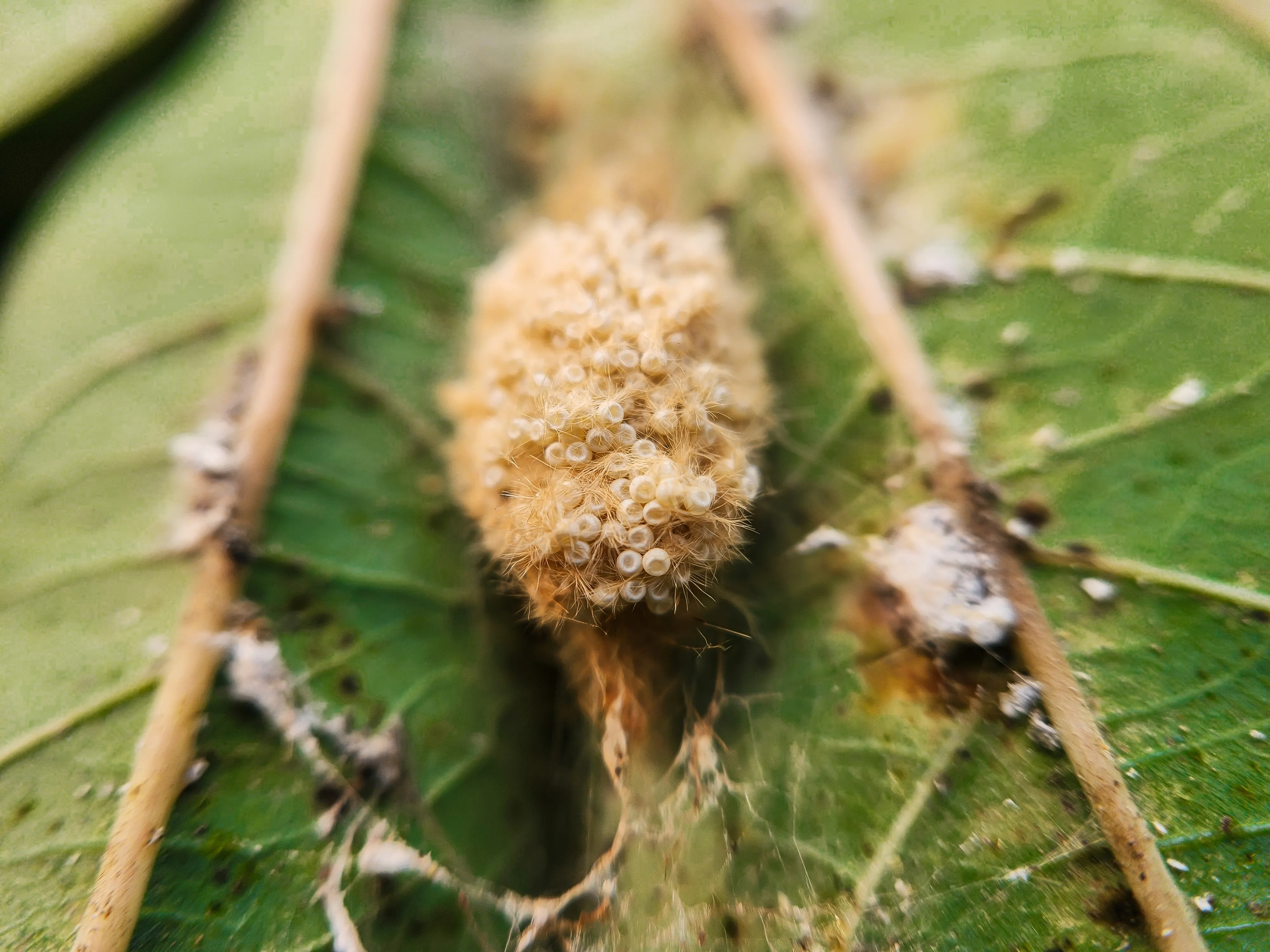
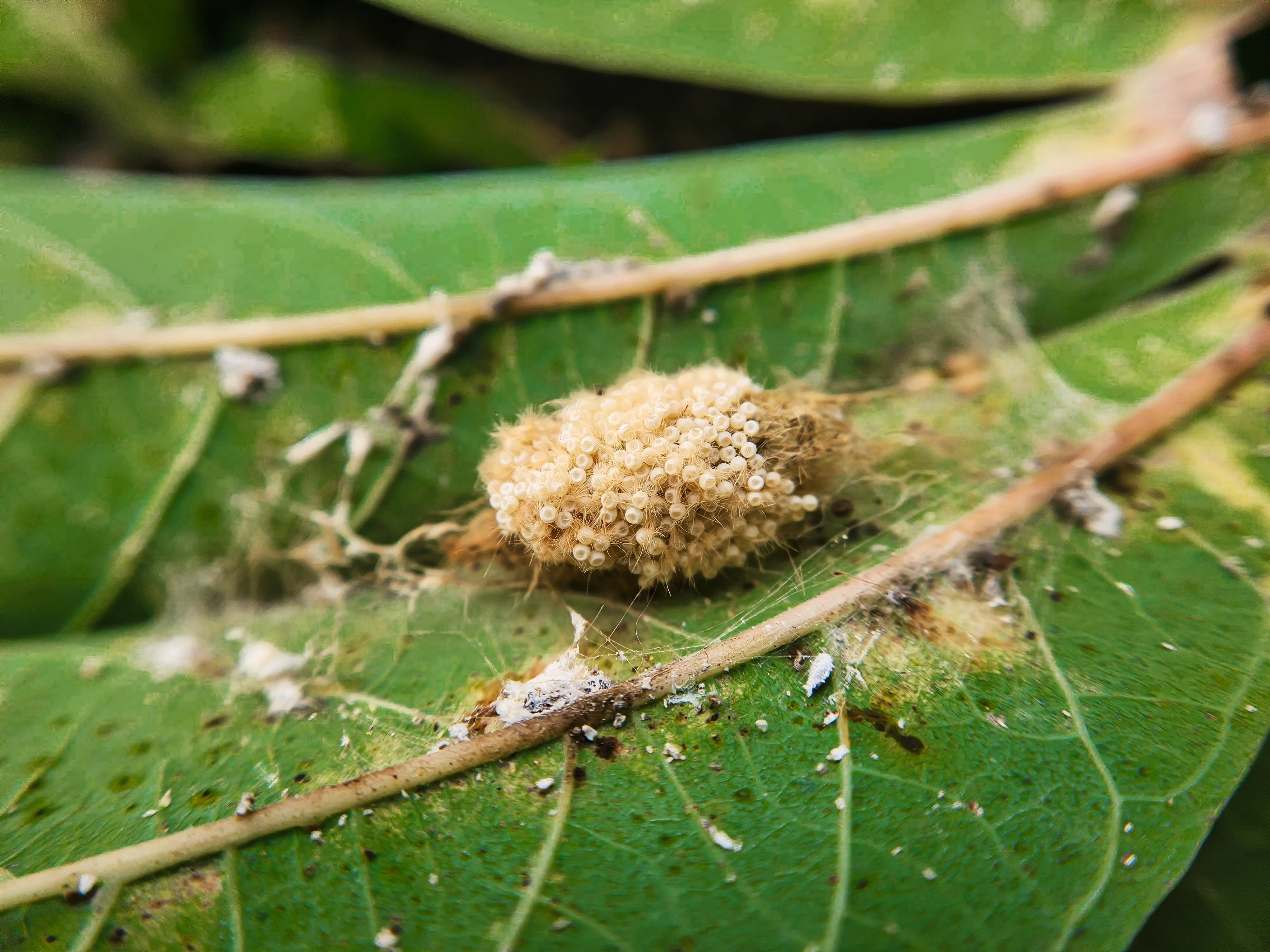
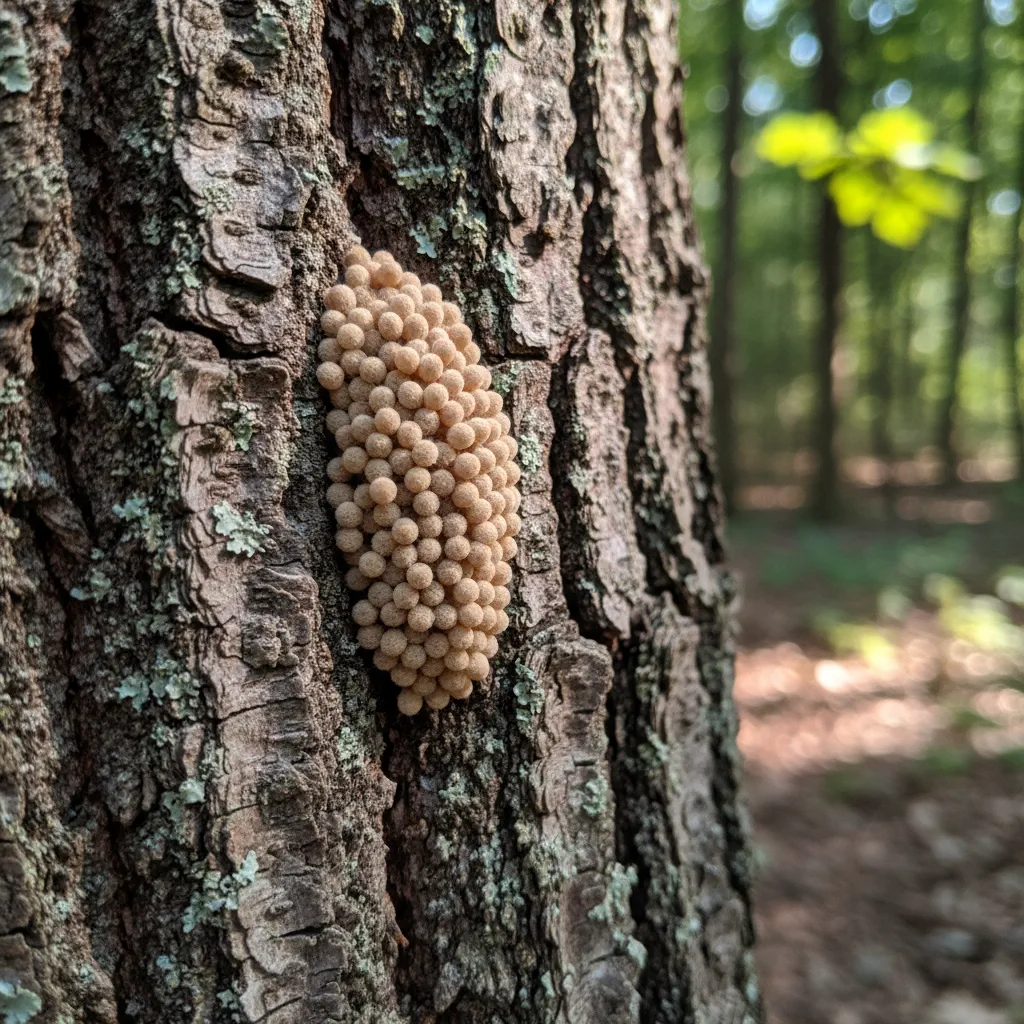
Long before the caterpillars start munching on your leaves, the Spongy Moth leaves clues behind in the form of egg masses. During the winter months, keep a close eye out for large plaques measuring about 3 to 4 centimetres long. These masses are covered in yellowish-brown hairs plucked directly from the female moth's abdomen, giving them a distinctly fuzzy, sponge-like texture.
Female moths are not particularly fussy about where they lay their eggs. You will often find these fuzzy clusters hidden deep within the crevices of tree bark, glued to brick walls, or attached to garden fences and outdoor furniture. Spotting them in winter is a massive advantage, as it gives you a head start on managing the population before they even hatch.
The Caterpillars (Spring and Summer)
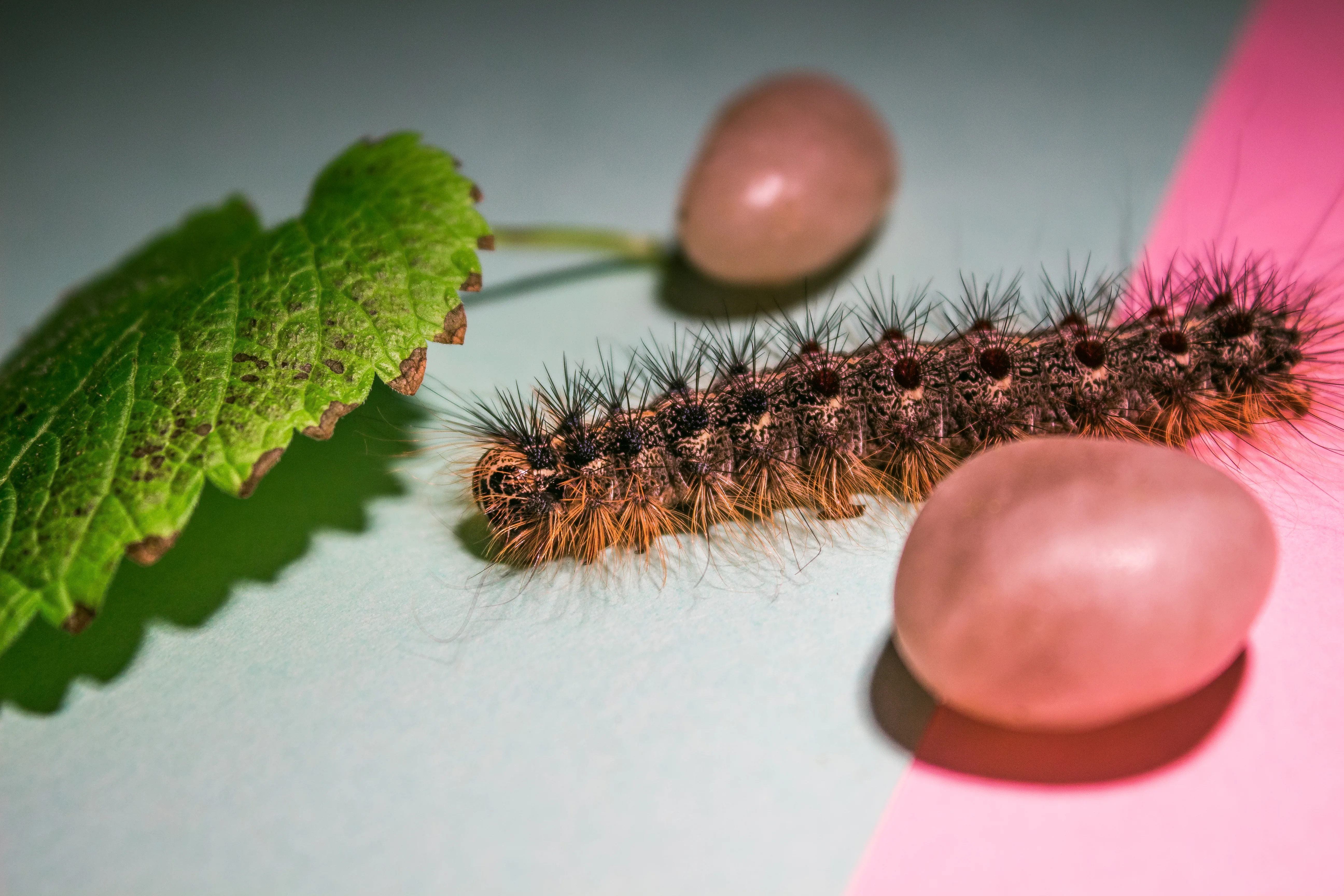
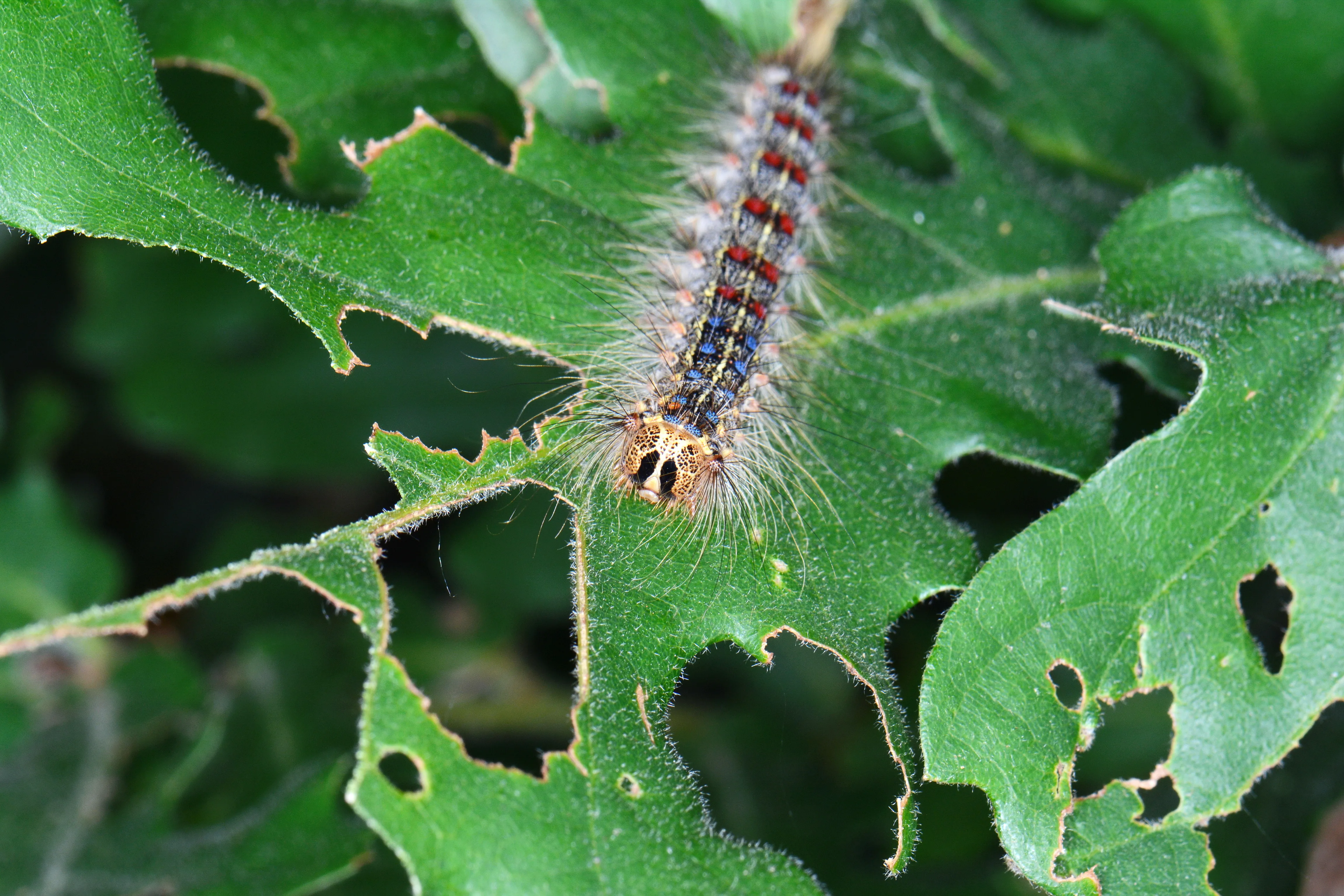
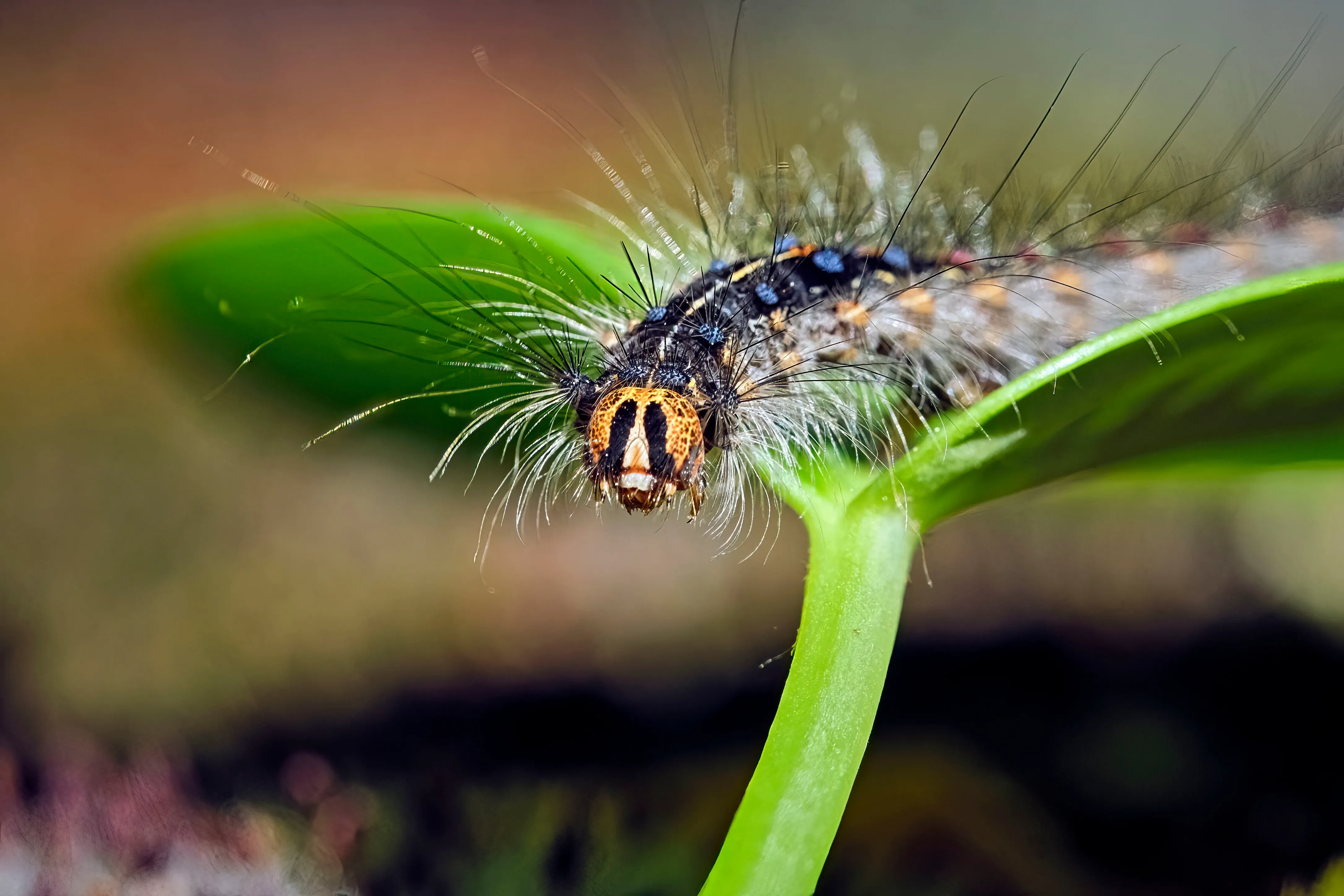
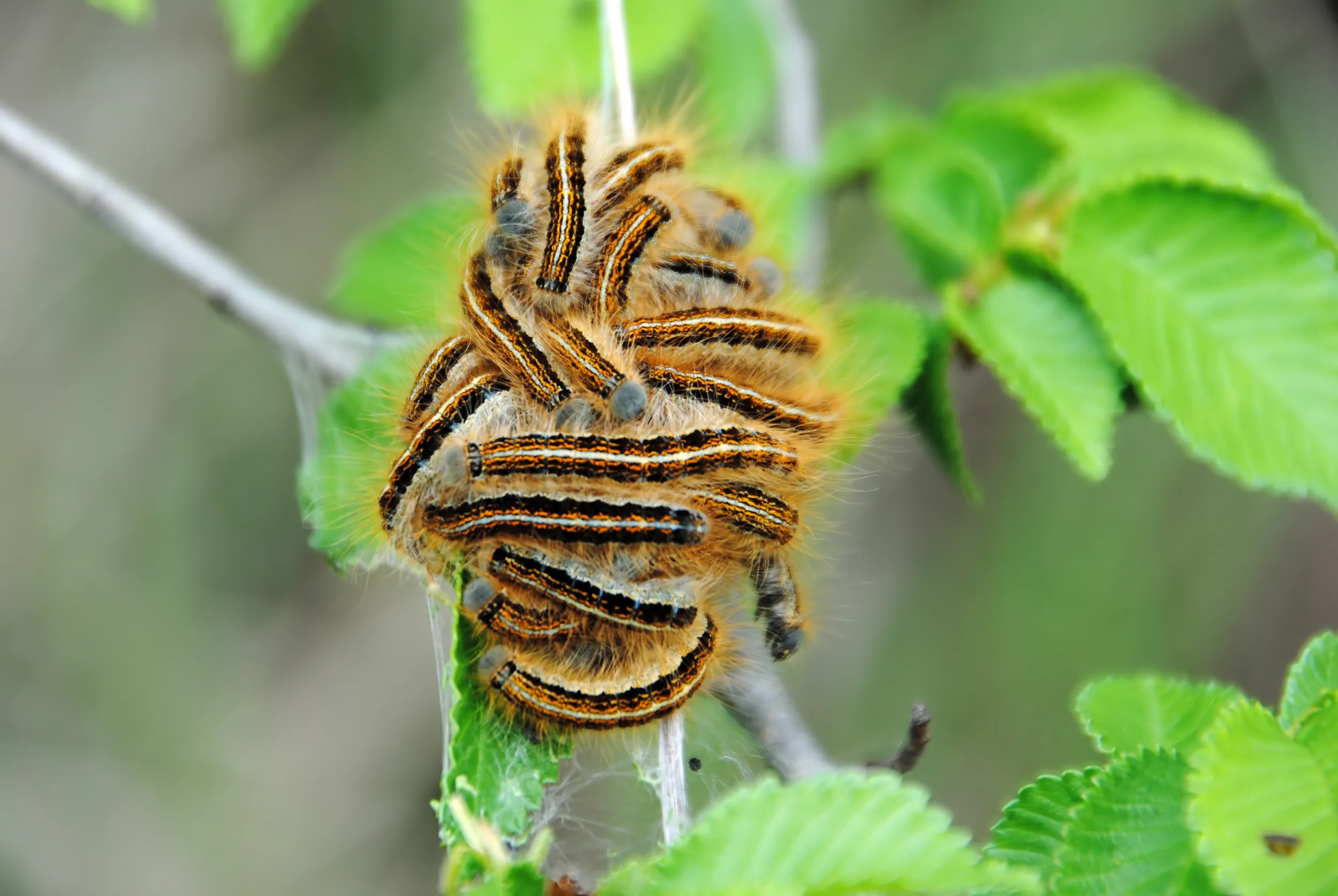
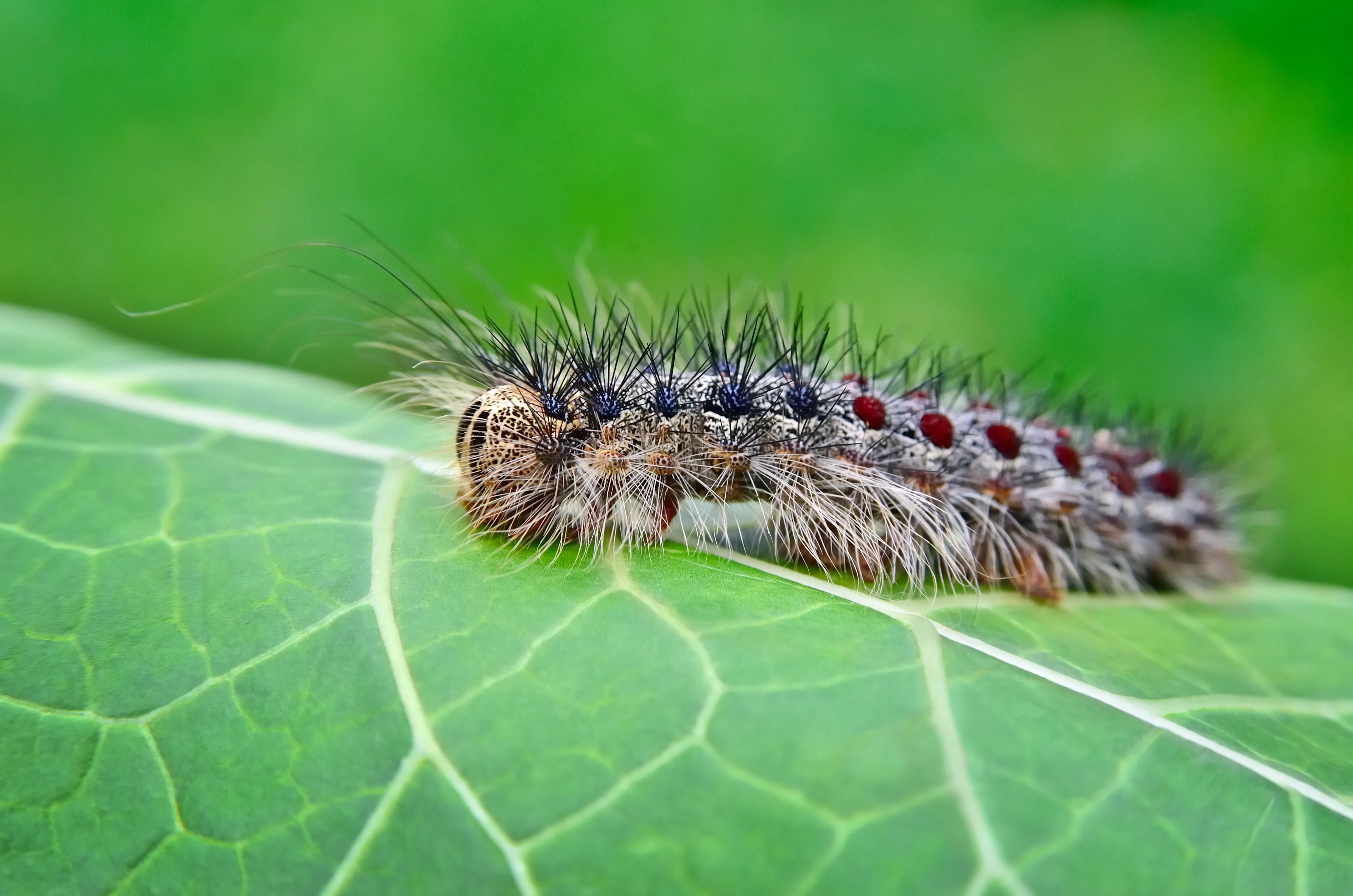
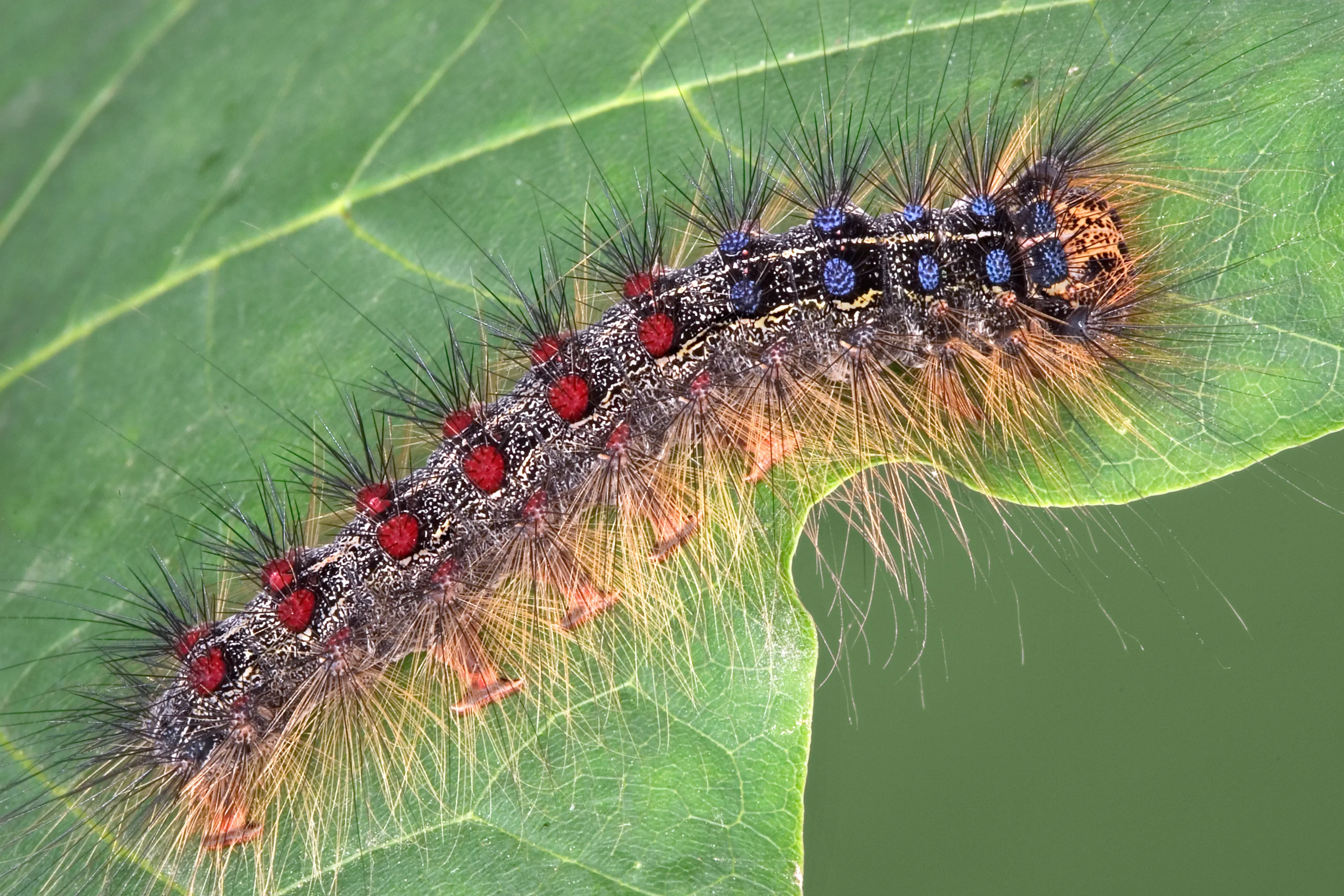
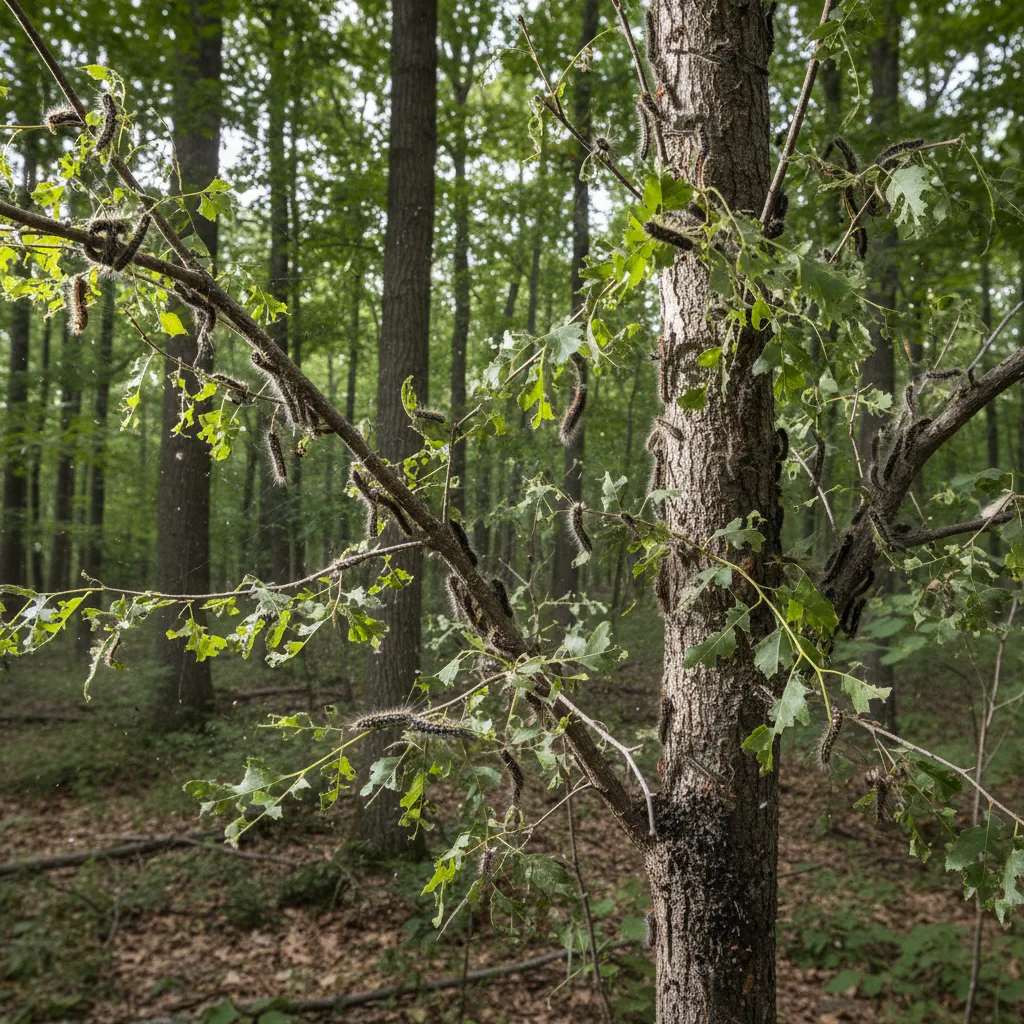
When spring arrives, the eggs hatch into larvae, and the true feeding frenzy begins. Spongy Moth larvae start out as tiny, dark specks barely 2 millimetres long. As they gorge themselves on your foliage, they rapidly grow up to 7 centimetres in length. They take on a brownish-yellow hue and become incredibly hairy, covered in long, stiff bristles.
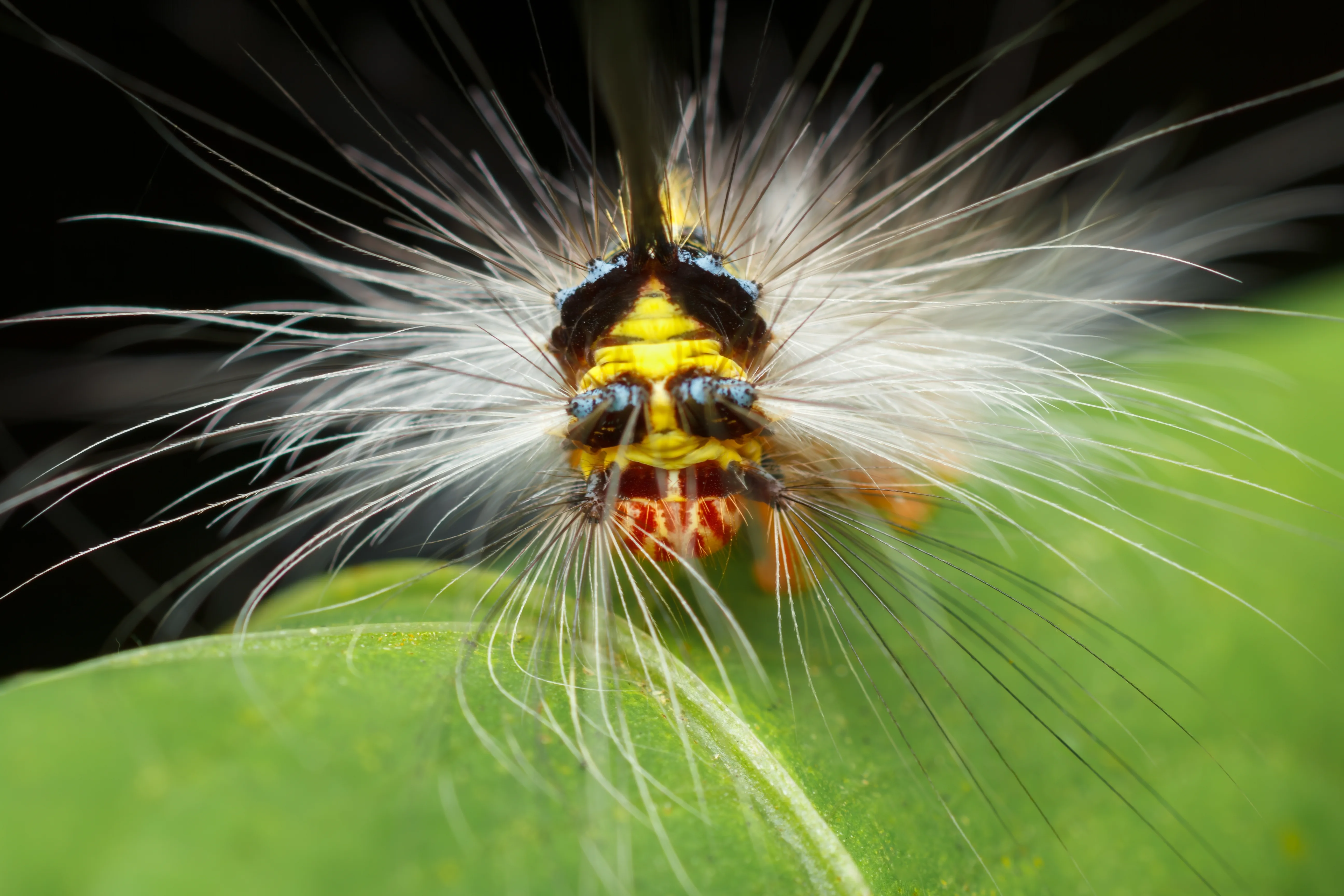
Their most distinctive feature is a striking pattern along their back. If you look closely, you will see five pairs of blue spots followed directly by six pairs of red spots. This colourful sequence is completely unique to Gypsy Moth Caterpillars and is the easiest way to distinguish them from other hairy larvae, particularly the dangerous Oak Processionary Moth, which lacks these bright spots and poses a far more severe health risk.
The Adult Moths (Late Summer)
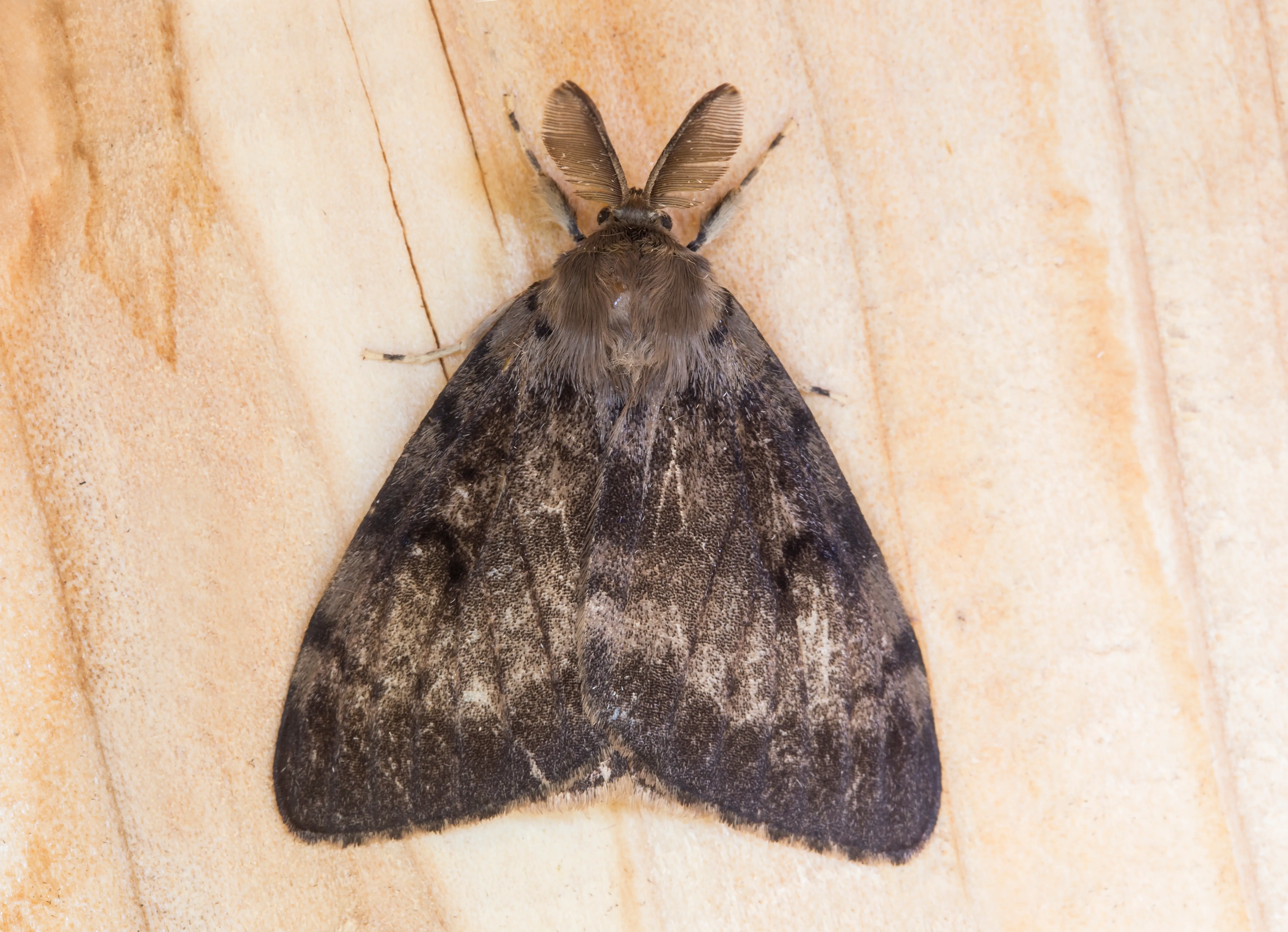
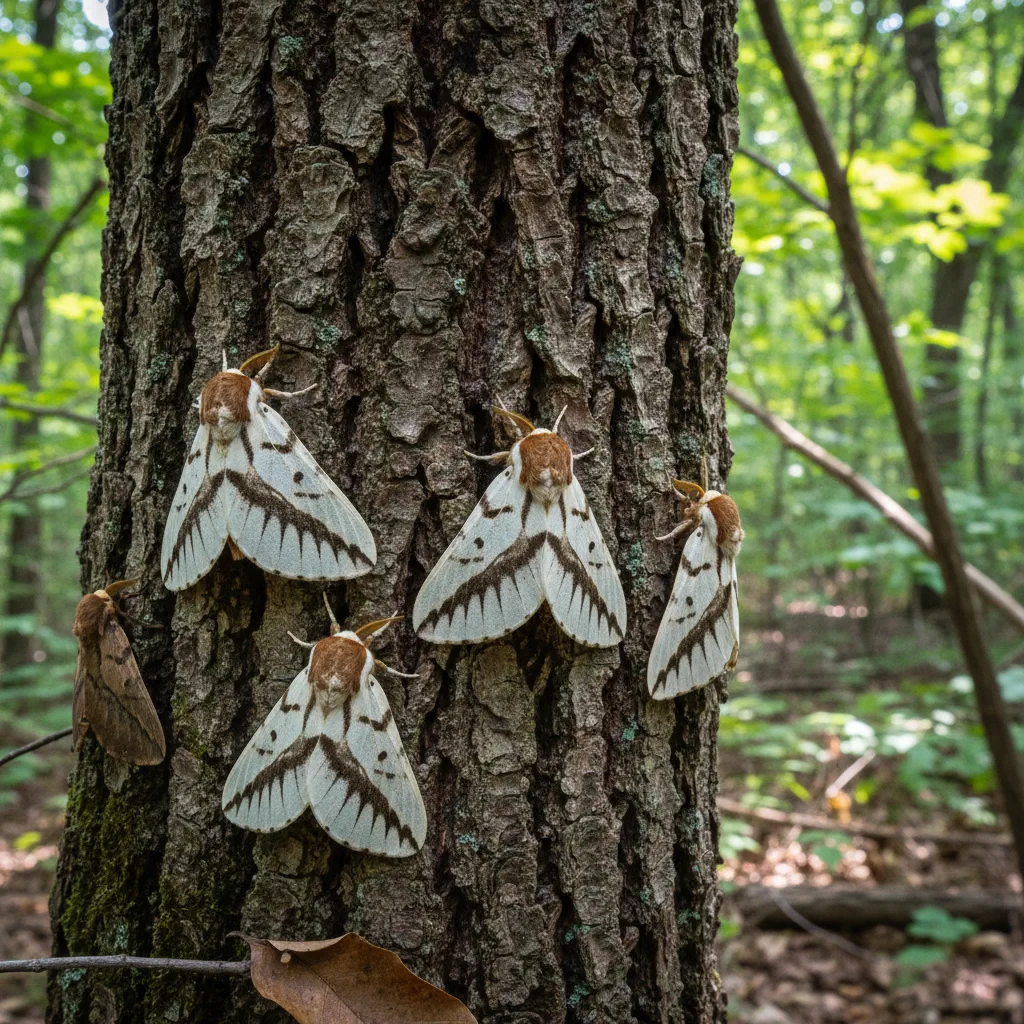
By late summer, the caterpillars have pupated and transformed into adult moths. The adults display extreme sexual dimorphism, meaning the males and females look entirely different from one another.
Male Spongy Moths are smaller, sporting greyish-brown wings marked with darker, wavy bands. They are strong fliers and possess large, feathery antennae that they use for sniffing out female pheromones from incredible distances. Females, on the other hand, are much larger and feature white or light beige wings with faint, dark zigzag markings. Despite having fully formed wings, the females are completely flightless. They spend their short adult lives waiting on tree trunks to mate and lay their eggs.
A Year in the Life: The Spongy Moth Lifecycle
Gypsy Moth Caterpillars
To outsmart a pest, you have to understand its rhythm. The Spongy Moth follows a highly predictable lifecycle tightly synchronised with the changing UK seasons.
Spring Hatching
The overwintering eggs usually hatch in April and May, perfectly timed with the emergence of fresh, tender leaves on host trees. Once hatched, the tiny caterpillars engage in a fascinating behaviour known as "ballooning". They climb to the tops of trees, spin a long, single silk thread, and simply let go. The spring winds catch the silk, carrying the tiny larvae through the air to disperse and colonise new host trees across the neighbourhood.
Summer Feast
From May through to late June, the primary objective is eating. The caterpillars feed voraciously, shedding their skins multiple times as they outgrow them. As they grow larger and more visible to predators, their habits shift. Older caterpillars tend to rest in the dark crevices of bark or leaf litter during the day, crawling up the tree canopy to continue their feast under the cover of night.
Pupation and Emergence
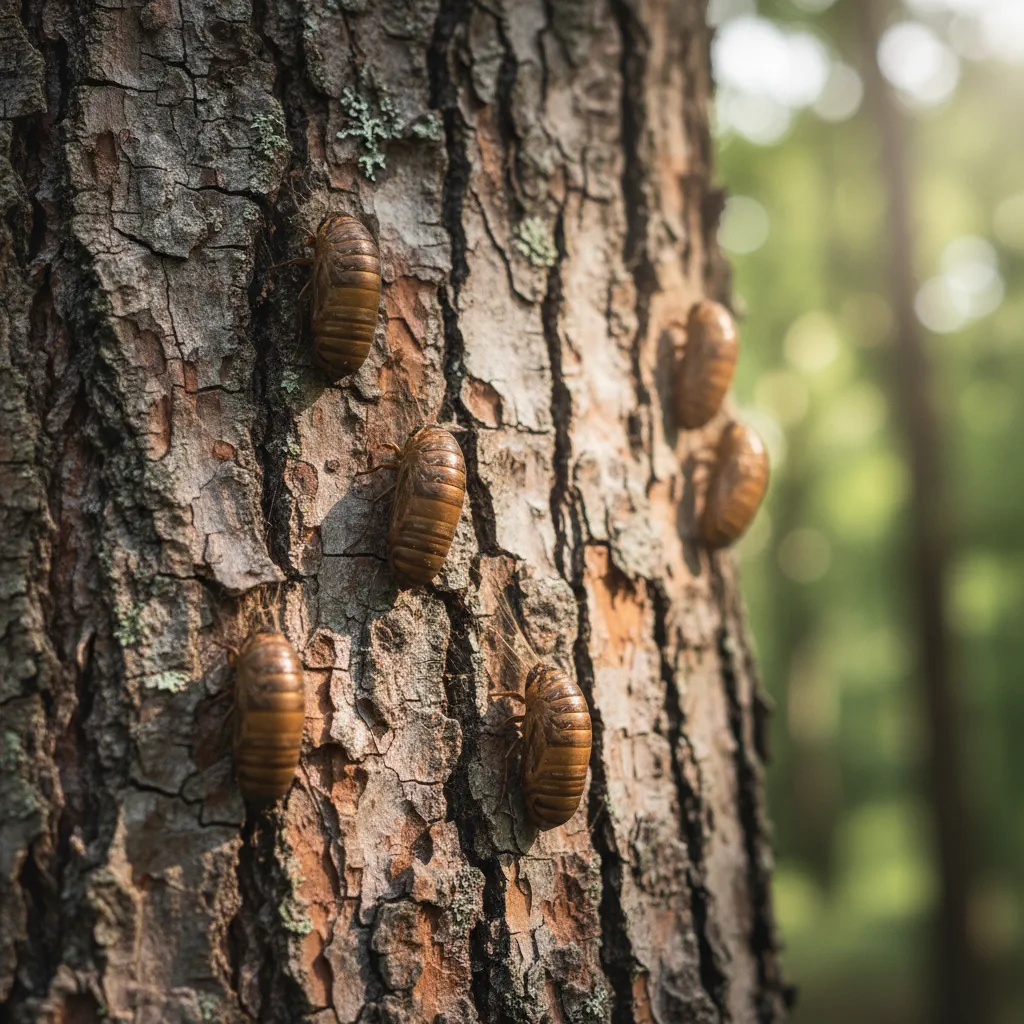
By June or July, the fully grown caterpillars stop feeding and search for a safe place to pupate. They shed their skin one last time, forming a dark brown, tear-drop-shaped pupal case attached to bark, walls, or branches. They remain in this stage for 10 to 14 days, undergoing their miraculous metamorphosis. They then emerge as adult moths, completely focused on mating. The adults do not eat at all; they simply reproduce, lay their spongy egg masses, and die, beginning the cycle anew.
The Garden Feast: Which Trees Are at Risk?
Gypsy Moth Caterpillars
Spongy Moths are famously polyphagous, which is a scientific way of saying they are incredibly unpicky eaters. They are known to consume the foliage of over 300 different species of trees and shrubs.
In UK gardens, they show a strong preference for some of our most beloved species. Oaks are their absolute favourite, but they will happily strip poplars, maples, birches, and hawthorns. They are also highly partial to popular hedging plants, particularly beech, which can be devastating for the privacy and structure of your garden borders.
However, there is a very positive fact that should reassure anxious gardeners. Most mature, healthy trees are highly resilient. Even if a tree is completely defoliated by a severe caterpillar infestation in early summer, it is rarely a death sentence. The tree will usually dig into its energy reserves to produce a second flush of leaves by late July, surviving the ordeal to grow another year.
Health Warning: Look, But Don't Touch!
Gypsy Moth Caterpillars
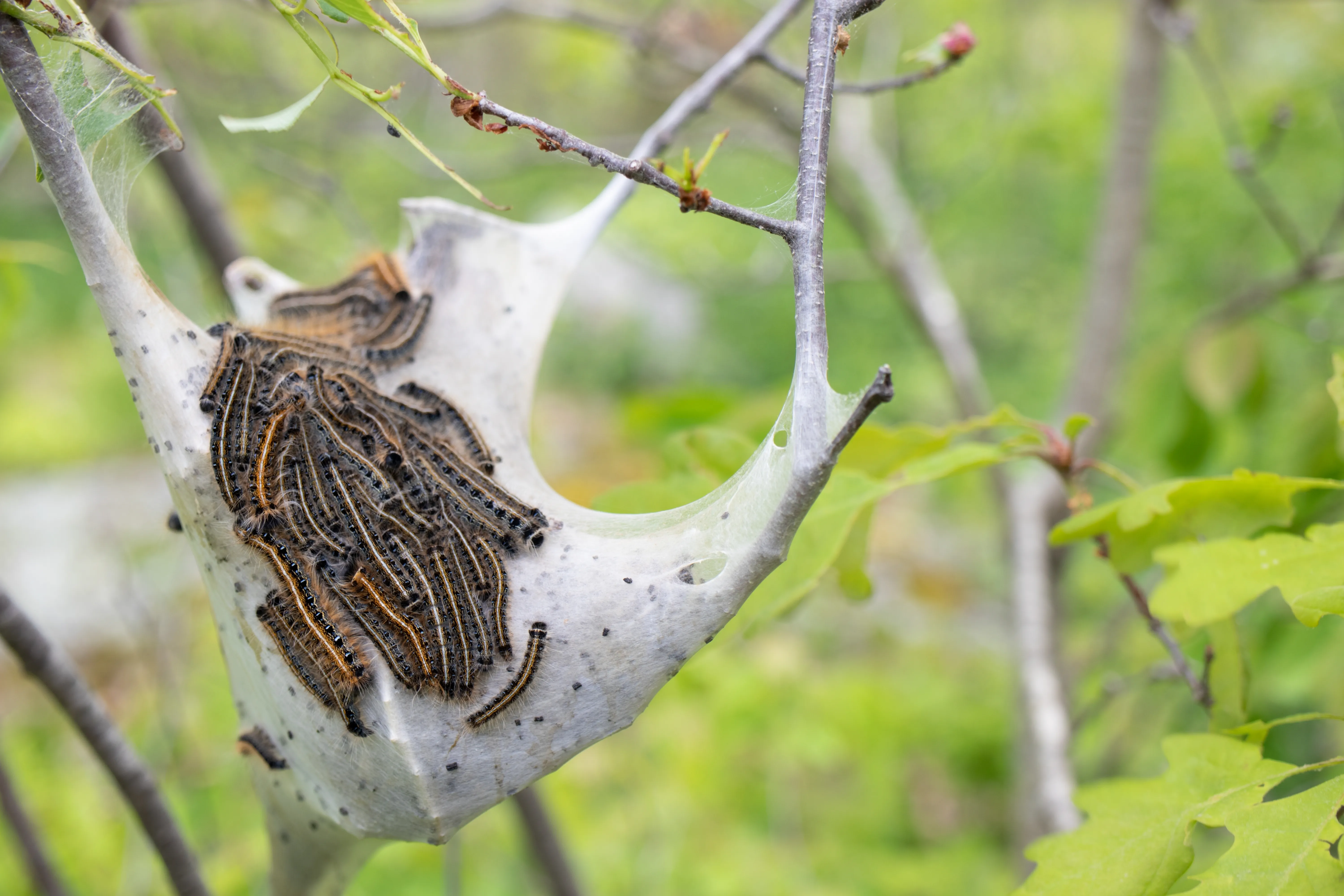
While observing these caterpillars can be a brilliant nature lesson, it is crucial to handle them with extreme caution. The hairs covering the Spongy Moth larvae serve as a potent defence mechanism against predators.
While they are not nearly as toxic as the highly dangerous Oak Processionary Moth, the hairs of Gypsy Moth Caterpillars can still act as strong allergens. If they come into contact with your skin, they can cause a condition known as lepidopterism. This results in mild to moderate skin irritation, itchy rashes, and raised welts in sensitive individuals.
Always prioritise safety when working around infested trees. Ensure you wear thick gardening gloves, a long-sleeved shirt, and trousers if you need to handle the caterpillars, scrape away egg masses, or prune affected branches. Keep curious children and pets well away from heavy infestations.
Step-by-Step Spongy Moth Management
Gypsy Moth Caterpillars
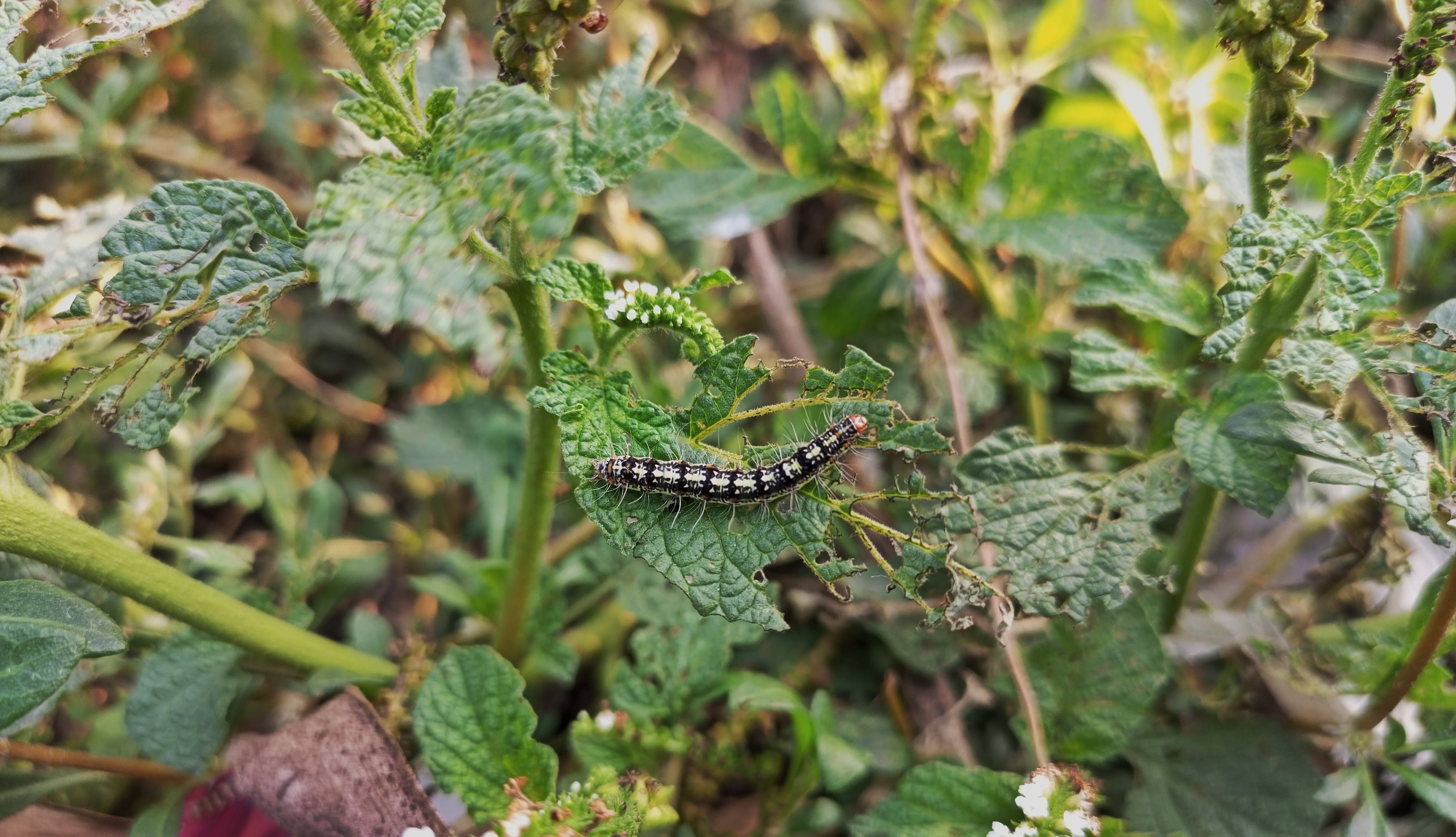
Effective management relies on a combined approach, blending physical removal with biological support. Chemical sprays should always be an absolute last resort, as they devastate beneficial pollinator populations.
Cultural and Biological Control
The Royal Horticultural Society (RHS) offers excellent advice for managing minor infestations: tolerate them where possible. Moths and their caterpillars are vital parts of the garden food web.
Your best long-term strategy is to encourage natural predators into your garden. Birds like blue tits and cuckoos are fantastic pest controllers that will happily feast on the larvae. Ground beetles and social wasps are also highly effective at hunting down caterpillars. You can attract these helpful allies by putting up bird boxes, planting diverse, pollen-rich flowers, and leaving small piles of logs and leaves to provide habitats for predatory insects.
Physical Intervention
If the population is spiralling out of control and threatening a particularly vulnerable or young tree, physical intervention is necessary.
From April onwards, check your vulnerable plants regularly. You can physically pick the caterpillars off by hand—wearing thick gloves, of course—and drop them into a bucket of soapy water, which breaks the surface tension and dispatches them quickly.
Winter management is often easier and highly effective. Wait until after the first hard frost, then use a blunt knife or a stiff brush to carefully scrape the fuzzy egg masses off tree bark and brickwork, dropping them straight into soapy water.
You can also use barrier methods. Applying sticky tree bands or wrapping the main trunk in folded burlap creates a trap. As the older caterpillars travel up and down the tree canopy daily, they will seek shelter in the folds of the burlap, allowing you to easily collect and dispose of them.
Protecting Your Garden and Promoting Biodiversity
Gypsy Moth Caterpillars
Gypsy Moth Caterpillars are hungry but fascinating creatures that have now become a permanent fixture in the landscape of South East England. By understanding their lifecycle and learning how to identify them, you can protect your vulnerable trees without resorting to harmful chemicals.
Always remember the reassuring truth: a healthy, well-watered garden can withstand a fair bit of munching. Promoting biodiversity and inviting natural predators into your outdoor space remains your strongest, most sustainable defence against any pest outbreak.
Take a moment this spring to inspect your oak trees and beech hedges. If you spot those distinctive red and blue spots, you now know exactly what to do. If you notice severe, unusual defoliation on your trees outside of the South East, please report it to Forest Research via their TreeAlert tool to help track their spread.
Do you want more seasonal pest-management tips and wildlife-friendly advice? Subscribe to our garden newsletter today, and let us help you grow a resilient, thriving garden all year round.
How to Prune Climbing Vines
List by Variety
- How to Prune Actinidia
- How to Prune Akebia
- How to Prune Bougainvillea
- How to Prune Campsis
- How to Prune Celastrus
- How to Prune Chilean Glory Vine
- How to Prune Clematis Armandii
- How to Prune Clematis Montana
- How to Prune Climbing Rose
- How to Prune Hedera GoldHeart
- How to Prune Honeysuckle
- How to Prune Hydrangea Petiolaris
- How to Prune Ivy
- How to Prune Japanese Wisteria
- How to Prune Morning Glory
- How to Prune Parthenocissus
- How to Prune Persian Ivy Hedera Colchica
- How to Prune Schisandra
- How to Prune Star Jasmine
- How to Prune Sweet Peas
- How to Prune True Jasmine
- How to Prune Virginia Creeper
- How to Prune Wisteria
How to Prune Hedges
List by Variety
- How to Prune an Arborvitae Hedge
- How to Prune a Barberry Hedge
- How to Prune a Beech Hedge
- How to Prune a Boxwood Hedge
- How to Prune a Butterfly Bush Hedge
- How to Prune a Cotoneaster Hedge
- How to Prune an English Lavender Hedge
- How to Prune an Escallonia Hedge
- How to Prune an Euonymus-Hedge
- How to Prune a Firethorn Hedge
- How to Prune a Forsythia Hedge
- How to Prune a Griselinia Hedge
- How to Prune a Hawthorn Hedge
- How to Prune a Holly Hedge
- How to Prune a Hornbeam Hedge
- How to Prune a Juniper Hedge
- How to Prune a Laurel Hedge
- How to Prune a Leylandii Hedge
- How to Prune a Lilac Hedge
- How to Prune a Maple Leaf Viburnum Hedge
- How to Prune a Photinia Hedge
- How to Prune a Pink Ramanus Rose Hedge
- How to Prune a Privet Hedge
- How to Prune a Pyracantha Hedge
- How to Prune a Spirea Hedge
- How to Prune a Thuja Hedge
- How to Prune a Viburnum Hedge
- How to Prune a Western Red Cedar Hedge
- How to Prune a Yew Hedge
How to Prune Shrubs
List by Variety
- How to Prune an Abelia Shrub
- How to Prune an Abutilon
- How to Prune an Acer / Japanese-Maple
- How to Prune an Amelanchiers
- How to Prune an Apple-Tree
- How to Prune an Arbovitae Shrub
- How to Prune an Arbutus
- How to Prune an Aucuba
- How to Prune a Azalea Mollis
- How to Prune Azaleas
- How to Prune a Bay Tree Shrub
- How to Prune a Berberis Darwinii
- How to Prune Berberis Deciduous Types
- How to Prune a Boxwood Shrubs
- How to Prune a Brachyglottis Senecio
- How to Prune a Buddleia Alternifolia
- How to Prune Buddleias Butterfly Bushes
- How to Prune a Buddleja Globosa
- How to Prune a Callicarpa
- How to Prune a Camellia
- How to Prune a Caryopteris
- How to Prune a Catalpa Bignonioides Aurea
- How to Prune Ceanothus Deciduous Types
- How to Prune Ceanothus Evergreen Types
- How to Prune a Ceratostigma
- How to Prune a Chaenomeles
- How to Prune a Choisya
- How to Prune a Cistus
- How to Prune a Clematis
- How to Prune a Cornus
- How to Prune a Cotinus Royal Purple
- How to Prune a Cytisus Scoparius
- How to Prune a Exochorda x Macrantha
- How to Prune a Forsythia
- How to Prune a Hebe
- How to Prune a Hydrangeas
- How to Prune Juniper Shrubs
- How to Prune a Lavatera
- How to Prune Lilac Bushes
- How to Prune a Mugo Pine
- How to Prune Rose Bushes
- How to Prune Ribes
- How to Prune Spirea Shrubs
- How to Prune Viburnum Shrubs
- How to Prune a Weigela
- How to Prune a Yew
How to Prune Trees
List by Variety
- How to Prune a Apple Tree
- How to Prune a Apricot Tree
- How to Prune a Ash Tree
- How to Prune a Birch Tree
- How to Prune a Cherry Tree
- How to Prune a Elm Tree
- How to Prune a Fig Tree
- How to Prune a Grape Tree
- How to Prune a Hickory Tree
- How to Prune a Maple Tree
- How to Prune a Oak Tree
- How to Prune an Olive Tree
- How to Prune a Peach Tree
- How to Prune a Pear Tree
- How to Prune a Plum Tree
- How to Prune a Poplar Tree
- How to Prune a Walnut Tree
How to Prune Climbing Vines
List by Variety
- How to Prune Actinidia
- How to Prune Akebia
- How to Prune Bougainvillea
- How to Prune Campsis
- How to Prune Celastrus
- How to Prune Chilean Glory Vine
- How to Prune Clematis Armandii
- How to Prune Clematis Montana
- How to Prune Climbing Rose
- How to Prune Hedera GoldHeart
- How to Prune Honeysuckle
- How to Prune Hydrangea Petiolaris
- How to Prune Ivy
- How to Prune Japanese Wisteria
- How to Prune Morning Glory
- How to Prune Parthenocissus
- How to Prune Persian Ivy Hedera Colchica
- How to Prune Schisandra
- How to Prune Star Jasmine
- How to Prune Sweet Peas
- How to Prune True Jasmine
- How to Prune Virginia Creeper
- How to Prune Wisteria
How to Prune Hedges
List by Variety
- How to Prune an Arborvitae Hedge
- How to Prune a Barberry Hedge
- How to Prune a Beech Hedge
- How to Prune a Boxwood Hedge
- How to Prune a Butterfly Bush Hedge
- How to Prune a Cotoneaster Hedge
- How to Prune an English Lavender Hedge
- How to Prune an Escallonia Hedge
- How to Prune an Euonymus-Hedge
- How to Prune a Firethorn Hedge
- How to Prune a Forsythia Hedge
- How to Prune a Griselinia Hedge
- How to Prune a Hawthorn Hedge
- How to Prune a Holly Hedge
- How to Prune a Hornbeam Hedge
- How to Prune a Juniper Hedge
- How to Prune a Laurel Hedge
- How to Prune a Leylandii Hedge
- How to Prune a Lilac Hedge
- How to Prune a Maple Leaf Viburnum Hedge
- How to Prune a Photinia Hedge
- How to Prune a Pink Ramanus Rose Hedge
- How to Prune a Privet Hedge
- How to Prune a Pyracantha Hedge
- How to Prune a Spirea Hedge
- How to Prune a Thuja Hedge
- How to Prune a Viburnum Hedge
- How to Prune a Western Red Cedar Hedge
- How to Prune a Yew Hedge
How to Prune Shrubs
List by Variety
- How to Prune an Abelia Shrub
- How to Prune an Abutilon
- How to Prune an Acer / Japanese-Maple
- How to Prune an Amelanchiers
- How to Prune an Apple-Tree
- How to Prune an Arbovitae Shrub
- How to Prune an Arbutus
- How to Prune an Aucuba
- How to Prune a Azalea Mollis
- How to Prune Azaleas
- How to Prune a Bay Tree Shrub
- How to Prune a Berberis Darwinii
- How to Prune Berberis Deciduous Types
- How to Prune a Boxwood Shrubs
- How to Prune a Brachyglottis Senecio
- How to Prune a Buddleia Alternifolia
- How to Prune Buddleias Butterfly Bushes
- How to Prune a Buddleja Globosa
- How to Prune a Callicarpa
- How to Prune a Camellia
- How to Prune a Caryopteris
- How to Prune a Catalpa Bignonioides Aurea
- How to Prune Ceanothus Deciduous Types
- How to Prune Ceanothus Evergreen Types
- How to Prune a Ceratostigma
- How to Prune a Chaenomeles
- How to Prune a Choisya
- How to Prune a Cistus
- How to Prune a Clematis
- How to Prune a Cornus
- How to Prune a Cotinus Royal Purple
- How to Prune a Cytisus Scoparius
- How to Prune a Exochorda x Macrantha
- How to Prune a Forsythia
- How to Prune a Hebe
- How to Prune a Hydrangeas
- How to Prune Juniper Shrubs
- How to Prune a Lavatera
- How to Prune Lilac Bushes
- How to Prune a Mugo Pine
- How to Prune Rose Bushes
- How to Prune Ribes
- How to Prune Spirea Shrubs
- How to Prune Viburnum Shrubs
- How to Prune a Weigela
- How to Prune a Yew
How to Prune Trees
List by Variety
- How to Prune a Apple Tree
- How to Prune a Apricot Tree
- How to Prune a Ash Tree
- How to Prune a Birch Tree
- How to Prune a Cherry Tree
- How to Prune a Elm Tree
- How to Prune a Fig Tree
- How to Prune a Grape Tree
- How to Prune a Hickory Tree
- How to Prune a Maple Tree
- How to Prune a Oak Tree
- How to Prune an Olive Tree
- How to Prune a Peach Tree
- How to Prune a Pear Tree
- How to Prune a Plum Tree
- How to Prune a Poplar Tree
- How to Prune a Walnut Tree
Gallery

Michael Carter
Vestibulum ante ipsum primis in faucibus orci luctus et ultrices posuere cubilia curae; Donec vel erat in nulla efficitur tempor non ut nisl. Integer venenatis eros ut dui viverra fermentum.
Sophie Wilson
Nam ut turpis hendrerit, varius nunc vel, elementum dui. Morbi vulputate dolor sit amet scelerisque egestas. Vestibulum eleifend nunc ut bibendum fermentum.
Alex Morgan
Cras non velit nec purus tempor rhoncus. Sed non mauris vitae erat consequat auctor eu in elit. Class aptent taciti sociosqu ad litora torquent per conubia nostra.